ultimate-guide
What to Expect During Tattoo Removal: A Complete Guide
Mandy Davis · 22 July 2026 · 10 min read
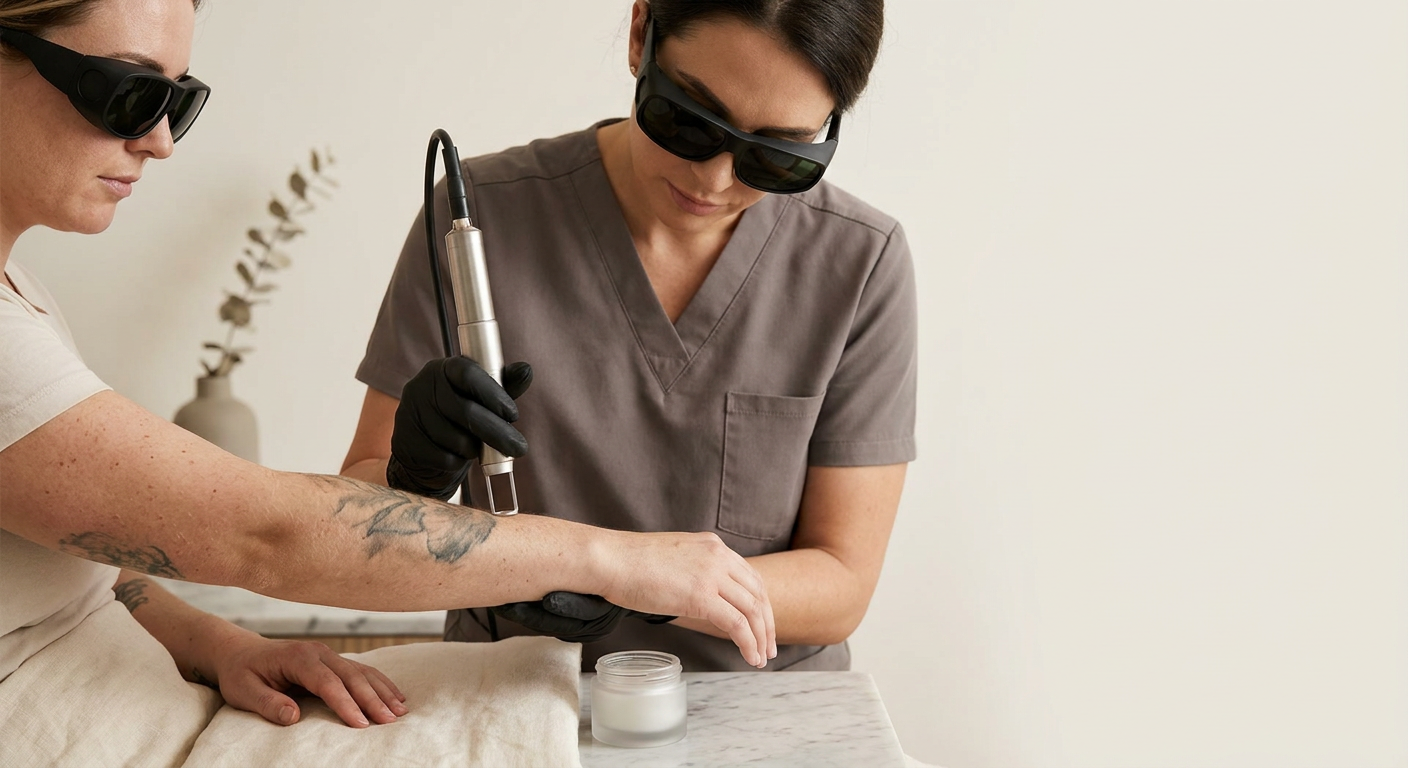
Table of Contents
- What to Expect During Your First Tattoo Removal Session
- Understanding Laser Tattoo Removal Pain Level and Comfort
- The Healing Process: What Happens After Treatment
- How Many Sessions for Tattoo Removal: Timeline and Expectations
- Tattoo Removal Aftercare Tips for Optimal Healing
- Preparing Psychologically and Physically for What to Expect
- Why Choose Our Pontyclun and Talbot Green Clinic for Tattoo Removal
- Conclusion
Last Updated: July 4, 2026
What to Expect During Tattoo Removal: A Complete Guide
Understanding what to expect during tattoo removal is essential before committing to the procedure. At Vale Laser Aesthetics, we've guided hundreds of clients through their tattoo removal journeys. This comprehensive guide walks you through every stage, from your first consultation through complete healing, so you can approach treatment with confidence.
What to Expect During Your First Tattoo Removal Session
Your first appointment sets the tone for your entire treatment journey. When you arrive at our clinic on Talbot Road, Talbot Green, RCT CF72 8AE, you'll meet with one of our fully qualified, HIW-approved practitioners who will assess your tattoo in detail. This initial consultation is completely free and carries no obligation.
During this pre-treatment consultation, your practitioner will examine the tattoo's size, colour, depth, and ink density. They'll ask about when you got the tattoo, what type of ink was used, and your skin tone. These factors directly influence how many sessions you'll need and how effectively the laser will fragment the pigment. Different ink colours respond differently to laser wavelengths, so your practitioner will explain which laser settings will work best for your specific tattoo.
The skin assessment is equally important. Your practitioner will check for any existing skin conditions, scars, or sensitivities that might affect treatment, review your medical history and medications, and explain the entire process with realistic timelines and results.
Understanding Laser Tattoo Removal Pain Level and Comfort
Most clients describe the sensation as similar to a rubber band snap against the skin, a sharp, stinging sensation that's brief but noticeable. Pain level varies depending on your pain tolerance, the tattoo's location, and ink density. Tattoos on bony areas like the ankle, spine, or ribs tend to be more sensitive because there's less soft tissue to absorb the laser energy. Tattoos on fleshy areas like the upper arm or thigh are generally more tolerable.
We offer topical anaesthetic options to help manage discomfort. Many clients apply numbing cream before their appointment, which reduces sensation significantly. Some practitioners also use cooling devices that chill the skin during the procedure. The procedure typically lasts only 15 to 30 minutes, depending on the tattoo's size, making the experience far more manageable than many people expect.
The Healing Process: What Happens After Treatment
Immediately after your session, the treated area typically becomes red and slightly swollen, similar to a mild sunburn. This is a normal inflammatory response as your immune system begins fragmenting the ink particles.
Over the first 24 hours, you'll likely experience mild tenderness and continued redness. Between days 2 and 7, blistering and scabbing often occur, a positive sign that the treatment worked. The blistering indicates the laser energy successfully reached the ink particles, and your body's immune system is actively clearing away fragmented pigment. Do not pick at scabs; let them fall off naturally, which usually happens within 7 to 14 days.

Around weeks 2 to 4, you may notice hyperpigmentation or hypopigmentation, temporary changes that usually resolve within a few weeks to months as your skin completes its healing cycle. By week 4, most visible healing is complete, though your immune system continues breaking down ink particles and clearing them through your lymphatic system.
How Many Sessions for Tattoo Removal: Timeline and Expectations
The number of sessions needed varies considerably. Professional tattoos with dense, high-quality ink typically require 8 to 12 sessions, whilst amateur tattoos with lighter ink might clear in 4 to 6 sessions. Older tattoos sometimes require fewer sessions because the ink has naturally faded over time.
Ink colour significantly affects the timeline. Black and dark blue inks respond most effectively to laser treatment. Red, orange, and yellow inks require specific laser wavelengths and often take longer. Green and purple inks are notoriously difficult and may require specialised equipment or additional sessions.
Skin tone also influences session requirements. Darker skin tones require more careful laser settings to avoid hypopigmentation, but this doesn't prevent excellent results, it simply means the approach is customised to your individual needs. Our HIW-approved practitioners have extensive experience treating all skin tones safely and effectively.
We typically recommend waiting 6 to 8 weeks between sessions. This waiting period allows your immune system adequate time to clear fragmented ink particles and allows your skin to fully heal. Attempting sessions too close together doesn't improve results and can increase the risk of adverse effects like scarring.
Tattoo Removal Aftercare Tips for Optimal Healing
The first 24 hours after treatment are critical. Keep the treated area clean and dry. Wash gently with mild soap and lukewarm water, then pat dry carefully. Avoid submerging the area in water for at least 48 hours.
Apply a thin layer of fragrance-free moisturiser or antibiotic ointment to keep the skin hydrated. Avoid thick, occlusive creams that trap heat and moisture. Sun protection is essential during the entire healing process. Avoid direct sunlight for at least 4 weeks after treatment. If you must go outside, wear protective clothing and apply broad-spectrum SPF 50+ sunscreen.
Avoid strenuous exercise and activities that cause excessive sweating for at least 48 hours. Avoid picking, scratching, or peeling away scabs, as this can cause scarring and uneven healing. For the first 2 weeks, avoid tight clothing over the treated area, as friction can irritate healing skin.
Minimise alcohol consumption for at least 48 hours after treatment, as it thins the blood and can increase inflammation. Staying well-hydrated supports your immune system's ability to clear fragmented ink.
Preparing Psychologically and Physically for What to Expect
Setting realistic expectations is perhaps the most important preparation you can do. Tattoo removal is a gradual process that requires patience. You won't see complete removal after a single session; instead, you'll see progressive fading with each treatment.
Understand that some tattoos may not fade to 100% invisibility. Certain ink colours, particularly greens and purples, can be stubborn. Discuss your specific goals with your practitioner during the consultation. They'll give you honest feedback about what's realistic for your particular tattoo and can show you before-and-after photos of similar cases.
Your skin tone and ink colour combination significantly influences outcomes. Darker skin tones with black ink typically achieve excellent results. Lighter skin tones with coloured inks may take longer but usually achieve good fading. Understanding these factors helps you approach treatment with realistic timelines rather than disappointment.
Consider your lifestyle during the treatment period. If you have a holiday planned, schedule it after your healing is complete. If you have important events, avoid scheduling treatments in the weeks beforehand.
Why Choose Our Pontyclun and Talbot Green Clinic for Tattoo Removal
At Vale Laser Aesthetics, we've built our reputation on expertise, safety, and genuine care for our clients. Our fully qualified, HIW-approved practitioners have extensive experience with tattoo removal across all skin tones, tattoo types, and ink colours. We utilise state-of-the-art, FDA-approved technology that delivers safe and effective results.
Our Pontyclun clinic and our base in Talbot Green serve the local community with personalised care. We're not a high-volume clinic rushing clients through appointments; we take time to understand your specific tattoo and goals. Every consultation is free and obligation-free. We've helped over 5,000 clients achieve their tattoo removal goals, and our 230+ five-star reviews reflect our commitment to excellence.
We offer comprehensive aftercare support throughout your entire treatment journey. Our practitioners provide detailed written instructions, recommend specific products, and are available to answer questions between sessions.
Booking your free consultation is straightforward. Visit our clinic at 67 Talbot Road, Talbot Green, RCT CF72 8AE, or contact us to arrange an appointment. During your consultation, our practitioner will assess your tattoo, discuss your goals, explain the entire process, and answer all your questions.
Tattoo removal is achievable, but it requires choosing the right clinic and practitioner. Understanding what to expect during tattoo removal, from the initial consultation through complete healing, helps you make informed decisions and commit fully to the process. Vale Laser Aesthetics, based in Talbot Green and serving Pontyclun and the surrounding area, combines modern technology with genuine expertise to deliver the results you're seeking. Our HIW-approved team offers a free consultation where we'll assess your tattoo, discuss realistic outcomes, and create a personalised treatment plan. Get started today and take the first step towards the clear skin you deserve.
Frequently Asked Questions
Does tattoo removal hurt, and what can I do to manage the pain?
Yes, laser tattoo removal causes discomfort often described as a rubber band snap against the skin. However, the sensation is manageable and typically lasts only seconds per pulse. We offer topical anaesthetic options at our Pontyclun clinic to reduce pain during what to expect during tattoo removal sessions. Most clients find the discomfort far less severe than getting the original tattoo.
How many sessions for tattoo removal will I need?
The number of sessions varies depending on tattoo size, ink density, colour, and skin tone. Most tattoos require between 6 and 12 sessions, spaced 6-8 weeks apart to allow your immune system time to clear fragmented ink particles. During your free consultation at our clinic on Talbot Road, Talbot Green, we can provide a personalised estimate based on your specific tattoo.
What tattoo removal aftercare tips should I follow after each session?
Keep the treated area clean and dry, apply recommended topical treatments, avoid sun exposure, and refrain from swimming or strenuous exercise for at least two weeks. Avoid picking at blistering or scabs, as this can cause scarring. Wear loose clothing over the area and use sunscreen (SPF 50+) once any crusting has healed. Our team at our Talbot Green clinic provides detailed aftercare instructions with every treatment.
Can all tattoo colours be removed equally well?
Not all colours respond equally to laser treatment. Black and dark blue inks are easiest to remove, whilst lighter colours like yellow, white, and green are more challenging. Different laser wavelengths target specific ink colours, so your practitioner may use multiple laser types during your sessions. We'll discuss colour-specific expectations during your consultation at our Pontyclun clinic.