ultimate-guide
Tattoo Removal: A Complete Guide to Your Options
Mandy Davis · 28 July 2026 · 16 min read
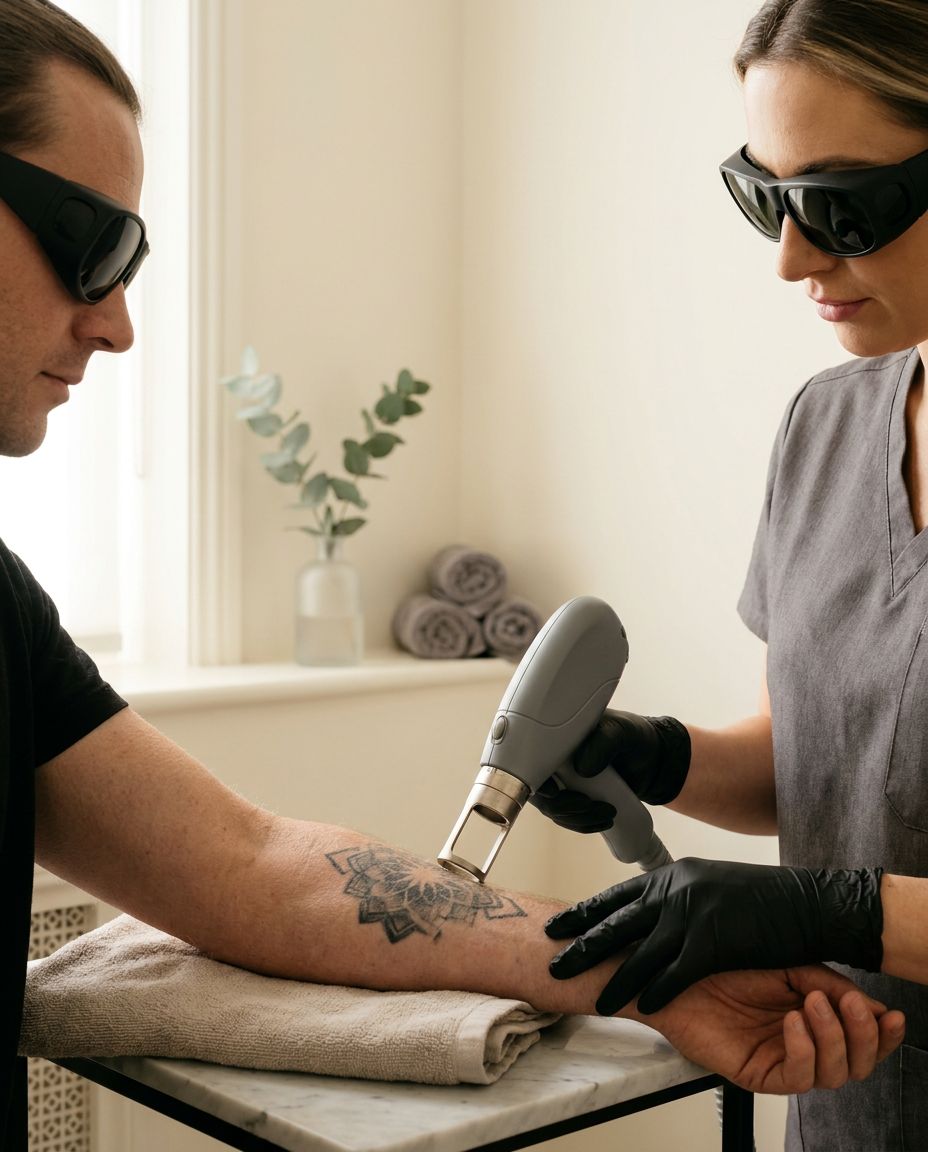
Table of Contents
- What Is Tattoo Removal and Why People Choose It
- Common Tattoo Removal Methods Explained
- How Many Sessions for Tattoo Removal
- Tattoo Removal Side Effects and Risks
- Tattoo Removal Aftercare: What You Need to Know
- Understanding Laser Tattoo Removal Cost and Investment
- Colour-Specific Removal Challenges and Solutions
- Tattoo Removal vs. Cover-Up: Making Your Choice
Last Updated: July 7, 2026
Tattoo Removal: A Complete Guide to Your Options
Tattoo removal has become significantly more accessible and effective over the past decade, with advances in laser technology transforming what was once a painful, uncertain process into a precise medical procedure. At Vale Laser Aesthetics, we understand that deciding to remove a tattoo is deeply personal. This comprehensive guide explores every realistic option available to you, from modern laser treatments to surgical approaches, helping you make an informed decision.
What Is Tattoo Removal and Why People Choose It
Tattoo removal eliminates unwanted ink from the skin using various medical and surgical techniques. When a tattoo is applied, ink particles embed in the dermis, the layer beneath the epidermis, where they remain permanent because particles are too large for the body's immune system to naturally eliminate. Professional tattoo removal breaks down these ink particles into smaller fragments that the body gradually absorbs and eliminates through the lymphatic system.

People choose tattoo removal for diverse reasons: design regret, misalignment with personal or professional identity, or self-consciousness in professional settings. Research shows approximately one in five people with tattoos eventually seek removal.
Modern tattoo removal has moved far beyond crude, scarring methods of the past. Today's approaches range from non-invasive laser treatments that preserve skin integrity to targeted surgical options for specific situations.
Common Tattoo Removal Methods Explained
Several distinct approaches to tattoo removal exist, each with different mechanisms, effectiveness rates, and suitability depending on your specific situation. The method that works best depends on tattoo size, colour, depth, your skin type, and how quickly you need results.
Laser Tattoo Removal with Q-Switched and Picosecond Technology
Laser tattoo removal is the gold standard in professional removal. The technology works through the photoacoustic effect: the laser emits extremely short, high-intensity pulses of light absorbed by tattoo ink particles. This energy heats the ink so rapidly that it shatters into tiny fragments, small enough for your body's macrophages (immune cells) to engulf and carry away through the lymphatic system.
Two main types of laser technology dominate professional practice: Q-switched lasers and the newer picosecond lasers. Q-switched technology has been the industry standard for over two decades and remains highly effective, particularly for black and dark-coloured inks, delivering energy in nanosecond pulses. Picosecond lasers represent a significant advancement, delivering energy roughly 1,000 times faster than Q-switched systems, creating more efficient photoacoustic effect with potentially fewer sessions required.
At Vale Laser Aesthetics, we utilise state-of-the-art, FDA-approved laser technology specifically calibrated for safe and effective tattoo removal across all skin types. Our fully qualified, HIW-approved practitioners have extensive experience matching the right wavelength to your specific ink colours. Different wavelengths target different colours: 532nm targets red and orange inks, whilst 1064nm targets black and dark blue inks.
Sessions typically last 15-45 minutes depending on tattoo size. The treated area may experience redness and mild swelling immediately after, similar to a sunburn, which usually subsides within hours to a few days.
Surgical Excision and Dermabrasion
Surgical excision involves physically removing the tattooed skin and stitching the surrounding skin together. This approach works best for small tattoos (typically under 5cm) because larger excisions create more noticeable scars. The advantage is immediate, complete removal. The significant disadvantage is that you're trading one permanent mark for another (a surgical scar).
Dermabrasion uses a rotating instrument to gradually sand away the tattooed skin layer by layer. This method is labour-intensive, typically requires multiple sessions, and carries meaningful risk of scarring and infection. Modern practitioners rarely recommend dermabrasion as a first-line option because laser technology has proven more effective with better outcomes.
Chemical Peels and Other Methods
Chemical peels for tattoo removal have largely fallen out of favour in professional settings because they're unpredictable, carry high scarring risk, and are significantly less effective than laser approaches. Other methods occasionally discussed, including salabrasion and topical creams, have no meaningful scientific evidence supporting their effectiveness. At our Talbot Green clinic, we focus exclusively on evidence-based approaches that deliver predictable, safe results.
How Many Sessions for Tattoo Removal
The number of sessions required for complete tattoo removal varies dramatically based on several interconnected factors. A simple black tattoo might require 4-6 sessions, whilst a complex multi-coloured professional tattoo could need 10-15 or more.
Factors That Affect Session Frequency
Tattoo Age and Ink Type: Older tattoos often require fewer sessions because the ink has already begun to break down naturally. Professional tattoos applied with high-quality inks typically require more sessions than amateur tattoos because professional inks are formulated to be more permanent and placed more deeply.
Ink Colour: This is perhaps the single most significant factor. Black and dark blue inks respond fastest, often showing meaningful fading within 2-3 sessions. Red and orange inks respond moderately well. Yellow, white, green, and light blue inks are notoriously difficult; some may never achieve complete removal.
Tattoo Size and Density: Larger tattoos require more sessions simply because there's more ink to fragment. Densely packed ink requires more sessions than lightly applied ink.
Your Skin Type: Darker skin types require more conservative laser settings to avoid hypopigmentation or hyperpigmentation. This means slightly less energy per session, translating to more sessions needed for complete removal. Choosing a practitioner experienced with diverse skin types is crucial.
Your Body's Response: Individual variation in how quickly your lymphatic system processes fragmented ink particles affects timeline. Factors like overall health, age, and immune function all play subtle roles.
A realistic timeline for most tattoos is 6-12 months of treatment (assuming 6-8 week intervals between sessions), though some complex tattoos require longer.
Tattoo Removal Side Effects and Risks
Understanding potential side effects is essential for making an informed decision. Most people experience minimal complications, but knowing what's possible helps you prepare and recognise normal healing versus concerning reactions.
Common Reactions and How to Minimise Them
Redness and Swelling: Nearly everyone experiences some redness and mild swelling immediately after laser treatment, similar to a moderate sunburn. This typically peaks within 24 hours and subsides over 3-7 days. Applying ice packs immediately after treatment and taking over-the-counter anti-inflammatory medication can minimise discomfort.
Blistering: Some people develop small blisters within 24-48 hours. This is actually a sign that the laser energy effectively reached the ink. Blisters typically heal within 1-2 weeks without intervention, though keeping the area clean and protected from sun exposure is essential.
Hypopigmentation and Hyperpigmentation: These represent changes in skin colour in the treated area. Hypopigmentation (lightening) is more common and usually temporary. Permanent colour changes are rare but possible, particularly with aggressive treatment or inappropriate laser settings in people with darker skin types.
Scarring: True scarring is uncommon with properly performed laser treatment but can occur if treatment is too aggressive or if the person has a predisposition to keloid formation. Professional treatment at established clinics minimises this risk substantially.
Infection: Keeping the treated area clean and protected from contamination prevents infection. Avoiding swimming, hot tubs, and excessive sweating for the first week reduces infection risk.
Paradoxical Darkening: Occasionally, some tattoo inks darken temporarily after laser treatment before fading. This is particularly common with certain iron oxide-based inks used in white or flesh-tone tattoos. This darkening is temporary and typically fades over subsequent weeks.
Most side effects are temporary and resolve with proper aftercare. Serious complications are rare with professional treatment.
Tattoo Removal Aftercare: What You Need to Know
The period immediately following each laser session is crucial for optimal healing and best results. Proper aftercare directly influences how effectively your body processes fragmented ink.
Immediate Post-Treatment (First 24 Hours): Apply ice packs to the treated area for 10-15 minutes at a time, several times during the first day. Avoid hot water, saunas, steam rooms, and strenuous exercise for at least 24 hours. Keep the area clean with gentle soap and water, and apply a thin layer of antibiotic ointment if blistering develops.
First Week: Avoid sun exposure entirely, or cover the area with protective clothing. If sun exposure is unavoidable, use SPF 50+ sunscreen. Don't pick at any blisters or scabs. Avoid swimming, hot tubs, and activities that cause excessive sweating. Wear loose clothing that doesn't rub against the treated area.
Weeks 2-6 (Until Next Session): Continue sun protection. Moisturise the area regularly with fragrance-free lotion. Resume normal activities gradually. Some people notice the tattoo appears darker during the healing phase; this is normal and doesn't indicate treatment failure.
Between Sessions: Maintain overall health through adequate sleep, hydration, and nutrition. These factors support your immune system's ability to process fragmented ink efficiently. Avoid scheduling sessions closer than 6-8 weeks apart.
At our Pontyclun clinic, we provide detailed aftercare instructions with every treatment and are available to answer questions if you're concerned about your healing progress.
Understanding Laser Tattoo Removal Cost and Investment
Pricing for tattoo removal varies considerably based on multiple factors. Understanding what influences cost helps you budget realistically and avoid unrealistic expectations based on suspiciously cheap offers.
What Influences Your Total Investment
Tattoo Size: Larger tattoos require more laser energy and longer treatment times per session, directly increasing per-session cost.
Colour Complexity: Multi-coloured tattoos require multiple laser wavelengths and more sophisticated treatment planning, increasing cost. Black-only tattoos are the most economical to treat.
Number of Sessions Required: This is the primary cost driver. A simple tattoo requiring 5 sessions costs substantially less than a complex tattoo requiring 12-15 sessions.
Practitioner Experience and Equipment: Clinics using modern picosecond laser technology and employing highly experienced practitioners typically charge more per session but often translate to fewer sessions needed and better results.
Location: Treatment at established, professional clinics typically costs more than at less-regulated facilities, but you're paying for safety, experience, and proper equipment.
Rather than focusing on the lowest per-session price, evaluate total realistic cost based on expected session count and quality of results. Vale Laser Aesthetics offers free consultations where we assess your specific tattoo and provide honest estimates of likely session requirements and realistic outcomes.
Colour-Specific Removal Challenges and Solutions
Different tattoo ink colours present distinctly different removal challenges.
Black and Dark Blue: These colours respond fastest to laser treatment because they absorb energy across multiple laser wavelengths effectively. Most black tattoos show meaningful fading within 2-3 sessions.
Red and Orange: These colours require specific laser wavelengths (typically 532nm) and respond moderately well. Most red and orange inks fade noticeably within 4-6 sessions.
Green: Green inks present a genuine challenge because they absorb energy less efficiently than darker colours. Complete removal often requires 8-12 sessions or more, and some formulations may never fade completely.
Yellow and Light Blue: These colours are notoriously difficult. They absorb minimal laser energy and fade very slowly. Realistic expectations might involve 15+ sessions with no guarantee of complete removal.
White and Flesh Tone: These are often created using titanium dioxide or iron oxide-based inks. Some white inks darken significantly when exposed to laser energy before eventually fading.
Multi-Coloured Tattoos: These require sequential treatment with different laser wavelengths, each targeting specific colours. This complexity extends overall treatment time and typically requires more total sessions.
Professional assessment before committing to removal helps set realistic expectations about what's achievable with your specific tattoo.
Tattoo Removal vs. Cover-Up: Making Your Choice
When facing an unwanted tattoo, removal isn't your only option. Cover-up tattoos, where a skilled artist designs new work that incorporates or obscures the original, represent a legitimate alternative worth considering.
Removal Advantages: Complete removal eliminates the original tattoo entirely, giving you unmarked skin. This appeals to people wanting genuinely unmarked skin or those uncomfortable with any permanent mark in that location.
Removal Disadvantages: The process takes 6-12+ months depending on complexity. Some tattoos never achieve complete removal. The cumulative cost of multiple sessions can be substantial.
Cover-Up Advantages: A skilled artist can create beautiful new work relatively quickly, often in 1-3 sessions. Cover-ups work particularly well when you want to transform a tattoo rather than eliminate it. The cost is often lower than removal.
Cover-Up Disadvantages: Cover-ups require accepting a permanent mark in that location. Not all original tattoos can be effectively covered; very large or very dark tattoos limit artistic options.
The Hybrid Approach: Some people pursue partial removal (lightening the original tattoo substantially) followed by a cover-up. This gives the artist more flexibility whilst reducing the original tattoo's visibility and often requires fewer removal sessions than complete removal.
Deciding to remove a tattoo is a significant choice, and having accurate information about realistic options, timelines, and outcomes matters enormously. Whether you're exploring laser removal, considering surgical approaches, or weighing cover-up alternatives, professional guidance from experienced practitioners makes all the difference.
At Vale Laser Aesthetics, based in Talbot Green and serving Pontyclun and the surrounding area, we specialise in safe, effective tattoo removal using state-of-the-art FDA-approved technology. Our fully qualified, HIW-approved practitioners have extensive experience assessing complex tattoos and creating personalised removal plans tailored to your specific ink colours, skin type, and goals. We're located at 67 Talbot Road, Talbot Green, RCT CF72 8AE, and we offer a free consultation where we assess your tattoo honestly and discuss realistic expectations without pressure. Get started with Vale Laser Aesthetics today and take the first step toward the skin you actually want.
Key Takeaways Summary
| Factor | Impact on Removal | Typical Timeline |
|---|---|---|
| Black/dark blue ink | Fastest fading | 4-6 sessions |
| Red/orange ink | Moderate speed | 6-8 sessions |
| Green ink | Slow fading | 10-12+ sessions |
| Yellow/light colours | Very slow/difficult | 12-15+ sessions or incomplete |
| Session spacing | Minimum 6-8 weeks between sessions for optimal results | 6-12+ months total |
| Professional tattoo | More sessions required than amateur work | Longer timeline |
| Multi-coloured design | Multiple wavelengths needed | Extended treatment duration |
External Resources for Further Reading
According to the American Academy of Dermatology's clinical guidance on tattoo removal, laser technology remains the gold standard for professional removal, with picosecond systems offering advantages over traditional Q-switched approaches for certain ink colours.
Research from the Journal of Cosmetic Dermatology documents that proper wavelength selection and spacing between sessions significantly influences both safety and efficacy outcomes across diverse patient populations.
The FDA's database of cleared medical devices maintains current information about approved laser systems for tattoo removal, helping practitioners and patients verify that equipment meets rigorous safety and effectiveness standards.
Frequently Asked Questions
How many sessions does it take to remove a tattoo completely?
The number of sessions for tattoo removal varies significantly depending on tattoo size, ink colour, depth, and your skin type. Most tattoos require between 6 and 12 sessions spaced 6-8 weeks apart. Darker inks like black and blue typically respond faster than lighter colours. Professional laser technology, like the FDA-cleared systems we use at our Pontyclun clinic, can achieve better results in fewer sessions than older methods.
What are the main side effects of laser tattoo removal?
Common tattoo removal side effects include temporary redness, swelling, blistering, and hypopigmentation (lightening of skin). Most reactions resolve within 2-3 weeks with proper aftercare. Serious complications like scarring or infection are rare when you choose a qualified practitioner using professional-grade equipment. Our HIW-approved team at our Talbot Road, Talbot Green clinic minimises risks through careful assessment and expert technique.
Can all tattoo colours be removed successfully?
Black and dark blue inks respond best to laser tattoo removal because they absorb laser energy efficiently. Lighter colours like yellow, white, and red are more challenging and may require additional sessions or specialised wavelengths. Some colours may fade rather than disappear completely. During your free consultation at our Talbot Green clinic, we'll assess your specific tattoo and discuss realistic outcomes based on ink composition and skin type.
What should I do to care for my skin after tattoo removal?
Tattoo removal aftercare is essential for healing and minimising side effects. Keep the treated area clean and dry, apply antibiotic ointment as directed, and avoid sun exposure for at least 4-6 weeks. Wear loose clothing over the area, avoid swimming and strenuous exercise for a few days, and use high-SPF sunscreen when outdoors. Our team at our Pontyclun clinic provides detailed aftercare instructions tailored to your treatment.