ultimate-guide
Safe Laser Hair Removal for Teenagers: A Parent's Guide
Mandy Davis · 26 June 2026 · 14 min read
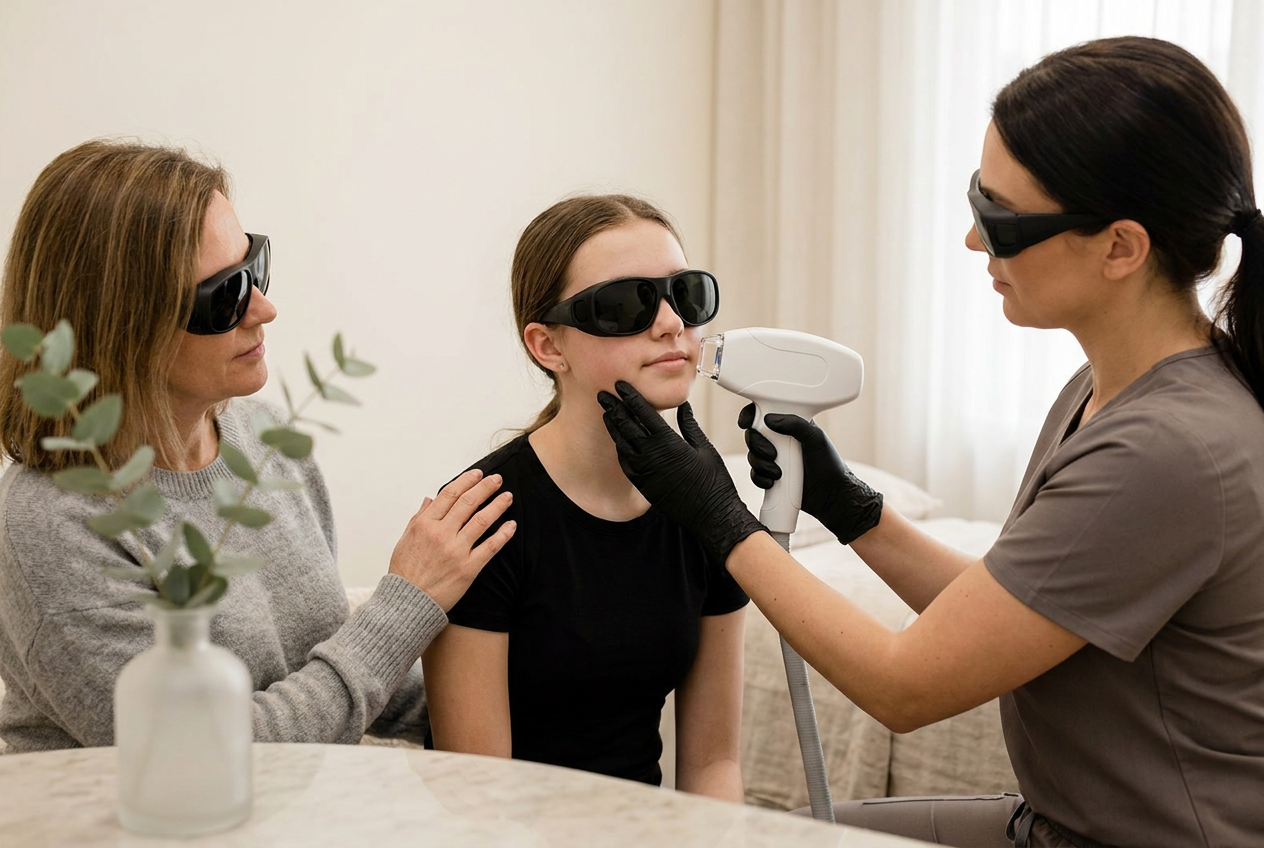
Table of Contents
- Is Laser Hair Removal Safe for Teenagers?
- Laser Hair Removal Age Requirement: When Is Your Teen Ready?
- How Laser Hair Removal Works: The Science Behind the Treatment
- Hormonal Hair Growth in Teenagers: Why Timing Matters
- Laser Hair Removal Side Effects for Teens: What to Expect
- Preparing for Laser Hair Removal: A Teenager's Pre-Treatment Checklist
- Post-Treatment Aftercare for Active Teenagers
- Benefits of Safe Laser Hair Removal for Teenagers Beyond Hair Reduction
Last Updated: June 20, 2026
Requests for safe laser hair removal for teenagers are growing year on year. Adolescents dealing with unwanted hair face daily frustration that temporary methods like shaving and waxing rarely resolve. At Vale Laser Aesthetics, we work with families across South Wales to answer the questions parents ask most: whether the treatment is genuinely appropriate for a young person. The short answer is yes, under the right conditions. Below, we cover minimum age guidance, parental consent, hormonal hair growth, side effects, aftercare, and the psychological benefits that most guides overlook.
Is Laser Hair Removal Safe for Teenagers?
Laser hair removal is a clinically established, non-invasive procedure that targets the hair follicle using concentrated light energy. When performed by a certified medical professional in a clinical setting with appropriate technology and thorough skin assessment, it is considered safe for teenagers. Safety depends heavily on practitioner qualification, equipment quality, and patient suitability, not age alone.
Understanding the Safety Profile
The procedure delivers laser energy into the melanin of the hair follicle, which absorbs the light and converts it to heat, disabling the follicle without damaging surrounding tissue. For teenagers, the primary safety considerations are skin sensitivity, hormonal activity, and the maturity of the hair growth cycle.
Skin sensitivity tends to be higher in adolescents, meaning the risk of short-term erythema (redness) or mild irritation is slightly elevated. A thorough pre-treatment consultation, including a patch test, is non-negotiable. Practitioners should assess skin tone carefully, because the contrast between hair colour and skin pigmentation determines which laser wavelength is appropriate.
Medical-Grade Technology and Clinical Settings
medical-grade technology has undergone rigorous clinical testing for both safety and efficacy. Choosing a clinic that uses only medical-grade equipment is the single most important factor in ensuring a safe outcome. At Vale Laser Aesthetics, all three South Wales clinics use medical-grade devices, and every practitioner holds full HIW approval, meaning the service is independently regulated to clinical standards.
Laser Hair Removal Age Requirement: When Is Your Teen Ready?
The laser hair removal age requirement is not a single fixed number. Most reputable clinics and dermatologists recommend waiting until a patient is at least 14 to 16 years old, with parental consent required for anyone under 18. Readiness is assessed on both physical and emotional maturity.
Recommended Minimum Age
During puberty, the body actively produces new terminal hair driven by androgens. Treating hair before this process stabilises can produce inconsistent results: follicles that were dormant during treatment may activate later, requiring additional sessions.
Most dermatologists suggest the most effective window for teenage laser treatment is when puberty is largely complete, typically from around 15 to 16 onwards, though this varies significantly by individual. A consultation with a qualified practitioner will assess hair density, hair growth cycle activity, and skin tone to determine whether the timing is right. The body areas most commonly treated in teenagers include the legs, underarms, and facial hair.
Parental Consent and Legal Considerations
Parental consent is legally required for anyone under 18 in the United Kingdom. Reputable clinics will not proceed without a signed consent form from a parent or legal guardian, and many require the parent or guardian to be present at the initial consultation. Parents should ask clinics directly about their safeguarding policies and whether practitioners have specific experience treating younger patients.
How Laser Hair Removal Works: The Science Behind the Treatment
Laser hair removal works by directing a specific laser wavelength at the melanin in the hair follicle during the anagen phase of the hair growth cycle. The anagen phase is the active growth stage when the follicle is most receptive to treatment, which is why multiple sessions are required.

Hair Follicles and the Growth Cycle
The hair growth cycle has three phases: anagen (active growth), catagen (transition), and telogen (resting). At any given time, only a proportion of follicles are in the anagen phase, which explains why a course of treatment sessions, typically six to eight for most body areas, is needed to achieve significant permanent hair reduction.
For teenagers, hormonal fluctuations can disrupt the predictability of this cycle. A follicle in the telogen phase during one session may become active later due to hormonal changes, which is why some young patients need occasional top-up treatments after their initial course.
Laser Technology and Skin Tone Considerations
The three most commonly used laser systems are the diode laser, the Alexandrite laser, and the Nd:YAG laser. Each operates at a different wavelength and is suited to different skin tone and hair density combinations.
| Laser Type | Best Skin Tone Match | Wavelength | Notes for Teens |
|---|---|---|---|
| Alexandrite | Fair to medium | 755nm | Highly effective on light skin, fine to medium hair |
| Diode | Medium to olive | 810nm | Versatile, suits many skin tones |
| Nd:YAG | Darker skin tones | 1064nm | Safest option for high melanin skin, reduces pigmentation risk |
Skin tone assessment is critical before any treatment. The risk of post-inflammatory hyperpigmentation is highest when the wrong laser wavelength is applied to a darker skin tone. A qualified esthetician or dermatologist will conduct a thorough Fitzpatrick skin type assessment before recommending a device. For a full breakdown of safe laser options for darker skin tones, see our guide on laser hair removal for dark skin.
Hormonal Hair Growth in Teenagers: Why Timing Matters
Hormonal hair growth in teenagers is driven by the surge in androgens that accompanies puberty. Treating a 13-year-old mid-puberty will produce far less consistent results than treating a 17-year-old whose hormonal activity has begun to stabilise.
Puberty and Hair Density Changes
During puberty, androgens stimulate the conversion of fine vellus hair to coarser terminal hair across the legs, underarms, and face. This process is ongoing and unpredictable during peak hormonal years. A laser session can successfully disable existing terminal hair follicles, but it cannot prevent new follicles from being activated by subsequent hormonal surges.
This is not a reason to avoid treatment; it is a reason to time it sensibly and set realistic expectations. Parents and teenagers should understand that a course of treatment during mid-puberty may require more follow-up sessions than one undertaken after the main hormonal transition is complete.
Treatment Sessions and Hair Growth Cycles
A standard course of safe laser hair removal for teenagers typically involves six to eight sessions spaced four to six weeks apart. This spacing is designed to align with the natural progression of the anagen phase across different follicle groups. Completing the full course is important; skipping sessions because results look promising after three treatments is a common mistake that can lead to re-emergence of dormant follicles.
Laser Hair Removal Side Effects for Teens: What to Expect
The side effects of laser hair removal for teens are generally mild and short-lived when treatment is carried out correctly.
Common Short-Term Effects
The most common short-term effects include erythema (redness) and mild swelling, typically resolving within two to four hours; a sensation similar to mild sunburn lasting up to 24 hours; temporary darkening of treated hairs before they shed; and mild itching as the skin heals. These effects are expected and not a cause for concern. Applying a fragrance-free soothing moisturiser and avoiding heat exposure for 24 hours will manage most of them effectively.
Rare Complications and Skin Sensitivity
Rare but possible complications include blistering, crusting, or changes in skin pigmentation. Post-inflammatory hyperpigmentation is the most clinically significant risk and is most likely to occur when the wrong laser is used for a patient's skin tone, when the treated area has been recently exposed to sun, or when the practitioner applies excessive energy levels. Choosing a clinic with HIW-approved practitioners and medical-grade equipment reduces this risk substantially.
Preparing for Laser Hair Removal: A Teenager's Pre-Treatment Checklist
Preparing correctly for a laser session is straightforward, but the steps matter. Poor preparation is responsible for a disproportionate number of adverse outcomes and suboptimal results.
Before Your First Session
The pre-treatment process begins at the consultation. During the consultation, the practitioner will assess skin tone using the Fitzpatrick scale, review medical history, identify any contraindications, and conduct a patch test.
Before the first full session:
- Avoid sun exposure and fake tan for at least four weeks before treatment
- Shave the treatment area 24 hours before the session (do not wax or use hair removal cream)
- Arrive with clean, product-free skin in the treatment area
- Inform the practitioner of any medications, particularly photosensitising drugs
- Bring a parent or guardian if under 18
What to Avoid Before Treatment
Waxing and epilating are the two most important things to avoid in the weeks before a laser session, as both remove the hair follicle from the skin, leaving no melanin target for the laser. Shaving cuts the hair at the surface and leaves the follicle intact.
Sun exposure is the other major pre-treatment risk. Tanned skin has elevated melanin levels, which increases the risk of the laser targeting skin pigmentation rather than the hair follicle. This is particularly relevant for teenagers who are active outdoors or who use sunbeds, which should be avoided entirely during a course of treatment.
Post-Treatment Aftercare for Active Teenagers
Post-treatment aftercare for active teenagers requires specific adjustments that standard aftercare advice does not always address. Young people are more likely to be involved in sports, swimming, and outdoor activities, all of which need to be managed carefully in the days following a session.

Immediate Aftercare Steps
The immediate priority after a laser session is calming the treated skin and protecting it from further irritation. For the first 24 to 48 hours:
- Apply a fragrance-free, cooling moisturiser or aloe vera gel to the treated area
- Avoid hot showers, saunas, and steam rooms for 24 hours
- Do not apply deodorant to treated underarm areas for 24 hours
- Wear loose, breathable clothing over treated areas to prevent friction
- Apply SPF 50 sunscreen to any treated areas that will be exposed to daylight
Managing Life After Treatment
Swimming pools and contact sports need a brief pause. Chlorinated water and friction from physical contact can irritate freshly treated skin. Most practitioners recommend avoiding swimming and high-impact sports for 48 hours after each session.
Teenagers who train regularly should plan their laser sessions around their training schedule, ideally booking sessions after a rest day so they have 48 hours before returning to intense activity.
Benefits of Safe Laser Hair Removal for Teenagers Beyond Hair Reduction
The physical outcome of laser treatment is permanent hair reduction, but the benefits that matter most to teenagers and their parents often go beyond what you can measure in a mirror.
Psychological Impact and Body Confidence
Unwanted hair during adolescence carries significant emotional weight. Teenagers navigating body image and social confidence often experience anxiety around visible unwanted hair, particularly facial hair or dense leg and underarm hair. Many young patients report that relief from daily shaving or waxing routines translates directly into greater confidence in social situations, sport, and school.
Unlike temporary methods that require constant maintenance and carry their own side effects, including ingrown hairs and razor rash, laser treatment offers a more permanent resolution. For teenagers experiencing genuine distress around unwanted hair, a properly timed, professionally supervised course of treatment can make a meaningful difference during years when body confidence matters enormously.
Long-Term Cost-Benefit Analysis
Temporary hair removal methods accumulate significant cost over time. A course of laser treatment requires a higher initial investment but produces permanent hair reduction that eliminates or dramatically reduces the need for ongoing maintenance. For a teenager who starts a course of treatment at 16, the long-term financial case is strong, with costs typically offset within a few years when compared to the cumulative cost of regular waxing appointments or premium shaving products.
Deciding whether laser hair removal is right for your teenager deserves proper professional guidance. Vale Laser Aesthetics provides fully qualified, HIW-approved practitioners across three South Wales clinics near Pontyclun, using medical-grade technology with over 20,000 treatments carried out to date. Book a free, no-obligation consultation and get a clear, honest assessment of whether the timing and treatment are right for your teenager.
Frequently Asked Questions
At what age is it safe to start safe laser hair removal for teenagers?
Most dermatologists recommend waiting until mid-to-late teens (typically 16 years and older) when puberty hormonal fluctuations have stabilised. However, some certified medical professionals may treat younger teens with parental consent if hair growth is causing significant distress. Age alone isn't the only factor, skin maturity, stable hair growth patterns, and realistic expectations matter equally. Always consult a qualified practitioner to assess individual readiness.
What are the main side effects of laser hair removal for teenagers?
Common temporary side effects include erythema (redness), mild swelling, and temporary darkening or lightening of skin in the treated area. Most resolve within hours to days. Post-inflammatory hyperpigmentation, temporary darkening of the skin, can occur, particularly in darker skin tones. Serious complications are rare when medical-grade technology is used by certified practitioners in a clinical setting. Skin sensitivity varies; a professional consultation assesses individual risk.
How does hormonal hair growth in teenagers affect laser hair removal results?
Hormonal fluctuations during puberty can trigger new hair growth in previously untreated areas or cause existing hair to become denser. This is why completing multiple treatment sessions is essential, laser targets hair in the active anagen phase of the growth cycle. Waiting until hormonal patterns stabilise (typically late teens) produces more predictable results. Some teens may need maintenance sessions if hormonal changes continue affecting hair density.
Do parents need to provide consent for teenage laser hair removal?
Yes, parental consent is legally required for minors in most clinics. This protects both the teenager and the medical practice. Parents should be involved in the consultation process to understand the treatment, discuss expectations, and confirm commitment to aftercare protocols. A reputable certified medical professional will explain safety, potential side effects, and realistic outcomes before proceeding, ensuring informed decision-making by both parent and teen.