ultimate-guide
Mole Removal Clinic Near Me: Expert Care in South Wales
Mandy Davis · 3 September 2026 · 14 min read
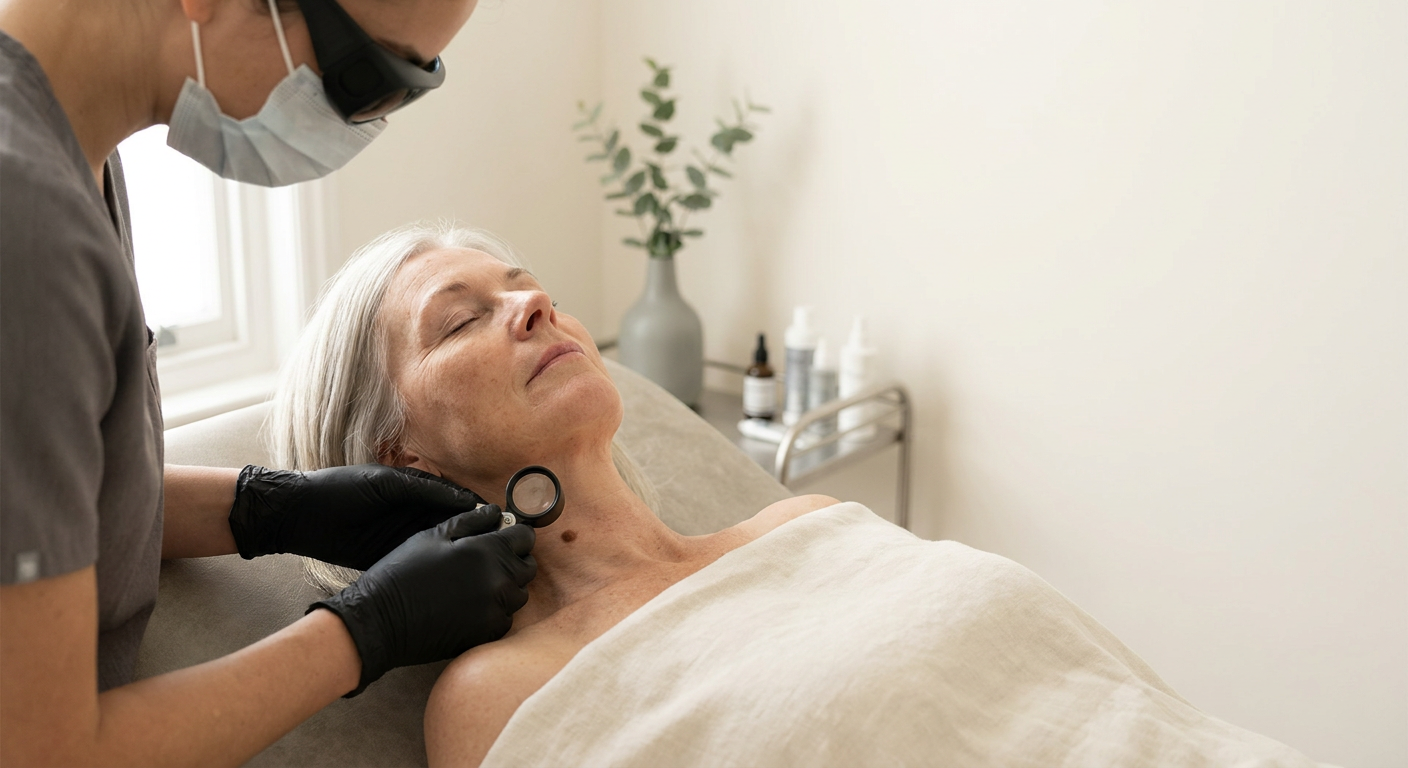
Table of Contents
- What Is Mole Removal and Why Choose a Professional Clinic Near You
- Types of Mole Removal UK Practitioners Offer
- Skin Cancer Screening and Mole Mapping at Our Clinic
- Is Mole Removal Painful? What to Expect During Treatment
- Mole Removal Aftercare: Recovery and Wound Healing
- Private Mole Removal UK Cost and What Affects Pricing
- Mole Check Near Me: Finding the Right Clinic in Pontyclun and Talbot Green
- When to See a Doctor About a Mole: Red Flags and Next Steps
Last Updated: August 1, 2026
What Is Mole Removal and Why Choose a Professional Clinic Near You
Finding a mole removal clinic near me is one of the most important health decisions you can make. At Vale Laser Aesthetics, we've assessed hundreds of patients seeking professional mole removal in South Wales, and the difference between expert care and rushed treatment is stark.
Moles are benign skin growths caused by clusters of melanocytes (pigment-producing cells). Most people develop new moles throughout their lifetime, particularly in sun-exposed areas. When you visit a mole removal clinic near me, the practitioner should assess whether removal is medically necessary, evaluate the mole's characteristics using established criteria, and explain your options clearly. This is where professional assessment differs fundamentally from cosmetic assumptions.
Our Pontyclun clinic specialises in professional mole assessment and removal using evidence-based techniques. We're HIW-approved, meaning we meet rigorous standards for clinical practice and patient safety. Every consultation begins with a thorough examination and honest discussion about whether removal is the right choice for your specific situation.
When moles become a concern
Moles warrant professional evaluation when they change in appearance, cause physical discomfort, or present cosmetic concerns that affect your confidence. Change is the most important red flag. A mole that has remained stable for years, then suddenly darkens, grows, or develops an irregular border, needs urgent assessment.
Some people seek removal purely for cosmetic reasons, whilst others come to us because they've noticed changes that worry them, or because family history of melanoma makes them cautious. Both reasons are legitimate drivers for seeking professional care.
Types of Mole Removal UK Practitioners Offer
The method your practitioner chooses depends on the mole's depth, size, location, and whether histology (microscopic examination) is needed. Understanding these options helps you have an informed conversation with your practitioner.
Surgical excision and shave removal
Surgical excision is the gold standard for moles where malignancy is suspected or where the full depth of the lesion needs examination. The practitioner removes the entire mole plus a margin of surrounding healthy skin, typically under local anaesthetic, and closes the wound with stitches. This allows the removed tissue to be sent for histopathology, laboratory examination under a microscope, providing definitive answers.
Shave removal is less invasive. The practitioner uses a surgical blade to shave the mole flush with the skin surface, removing the raised portion without going deep into the dermis. This heals quickly with minimal scarring, but cannot provide tissue for pathology examination. It's suitable only for benign, non-suspicious moles.
At our Pontyclun clinic, we assess each mole individually to recommend the most appropriate technique.
Cryotherapy and cauterisation options
Cryotherapy freezes the mole using liquid nitrogen, causing the tissue to blister and eventually slough off. This works well for small, flat, benign lesions and heals without stitches. Cauterisation uses heat or electrical current to destroy mole tissue with similar advantages. Both techniques are popular for cosmetic removal of small, clearly benign moles. However, if there's any clinical doubt about whether a mole is truly benign, full excision with histology is the safer choice.
Skin Cancer Screening and Mole Mapping at Our Clinic
Proper mole assessment isn't just about removing individual lesions, it's about evaluating your entire skin for signs of melanoma or other skin cancers.

Skin cancer screening involves systematic examination of your entire body, identifying all moles and pigmented lesions, and assessing each one against established criteria. Mole mapping goes further: we photograph and document your moles so that future changes become visible when you return for follow-up appointments.
Understanding the ABCDE criteria
The ABCDE criteria are a simple framework for identifying concerning moles:
Asymmetry: One half of the mole doesn't match the other.
Border irregularity: The edge is jagged, scalloped, or poorly defined.
Colour variation: Multiple colours within the same mole.
Diameter: Moles larger than 6mm warrant closer scrutiny.
Evolution: Any change over time, growth, darkening, itching, or bleeding. This is the single most important red flag.
If a mole meets any of these criteria, professional assessment is essential.
Why mole mapping protects your health
Mole mapping is valuable if you have many moles, a family history of melanoma, or fair skin with significant sun exposure. The process creates a baseline record against which future changes become obvious. Many melanomas are caught early because patients notice change. Without baseline photography, subtle changes are easy to miss.
At our clinic in Talbot Green, we recommend mole mapping for anyone with more than 50 moles, personal history of atypical moles, or family history of skin cancer.
Is Mole Removal Painful? What to Expect During Treatment
Local anaesthetic is the standard approach for any invasive mole removal. The practitioner injects a small amount of local anaesthetic (usually lidocaine) around the mole. You'll feel a brief sting from the injection, then numbness sets in within seconds. Once numb, you shouldn't feel pain, though you may feel pressure or vibration as the practitioner works.
Local anaesthetic and comfort measures
The injection itself is the most uncomfortable part of most mole removal procedures. Once the area is numb, you're genuinely numb, you won't feel cutting, cauterisation, or stitching. If you're particularly anxious, discuss this with your practitioner beforehand.
Pain levels across different removal methods
Shave removal is typically the quickest and least uncomfortable. You feel pressure but not pain once numb, and healing is straightforward. Surgical excision takes longer because the practitioner must remove deeper tissue and close the wound with stitches. You'll feel more pressure and vibration, but not pain. Cryotherapy and cauterisation don't use local anaesthetic for small moles. You'll feel cold or heat and mild discomfort, but it's tolerable and over quickly.
Post-procedure discomfort is usually mild. Most patients manage any soreness with over-the-counter paracetamol.
Mole Removal Aftercare: Recovery and Wound Healing
Proper wound care determines whether your scar fades beautifully or becomes prominent. Recovery timelines vary by removal method. Shave removal heals in 1-2 weeks. Surgical excision with stitches typically requires 7-10 days before suture removal, with full healing taking 4-6 weeks. Cryotherapy and cauterisation heal in 1-3 weeks depending on blister size.
Post-operative care instructions
Keep the wound clean and dry for the first 24-48 hours. Apply antibiotic ointment as directed and change dressings daily. Avoid sun exposure to the treated area for at least 4 weeks. Use high-factor sunscreen (SPF 50+) once the wound has closed. Don't pick at scabs or rush the healing process. Watch for signs of infection: increasing redness, warmth, swelling, pus, or fever, which warrant immediate contact with your clinic.
Scar management and long-term healing
Most mole removal scars fade significantly over 3-6 months. Initially, the scar appears red or purple and may be raised. Over time, scars typically become pale, flat, and much less noticeable. Location matters; scars on the face typically heal more visibly than those on the body. Tension on the wound during healing worsens scarring. If a scar remains prominent after 6 months, several options exist including silicone scar treatments, laser resurfacing, or dermal fillers.
Private Mole Removal UK Cost and What Affects Pricing
Understanding what influences mole removal costs helps you make informed decisions. Several variables affect the total cost. The removal method chosen, shave removal is typically less expensive than full excision with stitches. Whether histology is needed, this adds cost but provides crucial diagnostic information. The mole's size and depth. The number of moles being removed in one appointment.
Factors that influence treatment cost
Shave removal of a small, clearly benign mole costs less than full surgical excision of a larger, potentially concerning lesion. Histology adds cost because the tissue must be sent to a pathology laboratory for microscopic examination. However, if there's any clinical concern about a mole, this examination is essential. Location influences pricing too. A mole on the face may cost more than one on the back, partly because facial removal requires greater precision to minimise scarring. Multiple moles removed in one appointment typically cost less per mole than individual appointments.
NHS versus private dermatology
The NHS provides mole removal when medically necessary, typically when there's clinical concern about malignancy. However, NHS waiting times can be substantial, and purely cosmetic removal usually isn't funded. Private dermatology offers faster access, choice of practitioner, and removal of cosmetic moles that the NHS won't fund.
If you're uncertain whether a mole warrants removal, we provide a free consultation to discuss your concerns and recommend the best pathway forward.
Mole Check Near Me: Finding the Right Clinic in Pontyclun and Talbot Green
Choosing a mole removal clinic near me is more important than many people realise. What separates an excellent mole removal clinic from an average one? Proper diagnostic equipment including dermatoscopes. Qualified practitioners with dermatology training, not just cosmetic qualifications. Willingness to refer to secondary care if malignancy is suspected. Realistic discussion of outcomes and limitations.
What to look for in a dermatology clinic
Verify the clinic's credentials. Are practitioners qualified dermatologists or dermatology-trained nurses? In the UK, look for GMC registration (doctors) or NMC registration (nurses). Ask whether the clinic is HIW-approved, this indicates meeting rigorous clinical standards.
Examine their approach to assessment. Do they perform thorough skin examination, or do they focus only on the mole you're concerned about? Do they use dermatoscopy? Will they discuss whether removal is actually necessary, or do they assume all moles should come off? A good clinic sometimes recommends against removal.
Ask about their biopsy and histology protocols. If a mole looks potentially concerning, can they send tissue for pathology examination? Review their before-and-after photos to assess cosmetic outcomes.
Our HIW-approved clinic and free consultation
We're proud to offer expert mole assessment and removal at our clinic on Talbot Road, Talbot Green, RCT CF72 8AE. Our team comprises fully qualified, HIW-approved practitioners with extensive dermatology experience. We use professional-grade dermatoscopy, maintain rigorous clinical standards, and provide honest assessment of whether removal is truly necessary.
We offer a free consultation for anyone uncertain about a mole. During this appointment, we examine your mole, discuss your concerns, explain our assessment, and outline your options. Many patients from Pontyclun and the surrounding Talbot Green area visit us specifically because we take time to assess properly rather than rushing to removal.
When to See a Doctor About a Mole: Red Flags and Next Steps
Knowing when professional assessment is urgent versus routine helps you prioritise appropriately. Seek urgent assessment, ideally within days, if a mole has changed recently. Change is the most important red flag. A mole that's grown noticeably, darkened, developed an irregular border, or started itching or bleeding needs prompt professional evaluation.
Other concerning features include asymmetry, colour variation, diameter larger than 6mm, or any feature that simply looks wrong to you. Trust your instinct; if a mole concerns you, get it assessed.
Recognising dysplastic naevi and concerning changes
Dysplastic naevi are atypical moles with features between normal moles and melanoma. They're not cancer, but they carry increased melanoma risk and warrant regular monitoring. Changes that warrant urgent assessment include rapid growth, darkening, development of irregular borders, colour variation, itching, bleeding, or ulceration.
GP referral pathways and private consultation options
If you're concerned about a mole, your GP is a good starting point. They can assess whether urgent dermatology referral is needed. If malignancy is suspected, NHS referral is typically urgent (seen within 2 weeks). For cosmetic concerns or routine assessment, NHS waiting times may be longer.
Private consultation offers faster access. You can book directly with a private dermatology clinic like ours in Pontyclun, typically getting an appointment within days. For cosmetic concerns or routine assessment, this is often the most practical route.
At Vale Laser Aesthetics, we're here to help. If you're unsure whether a mole needs assessment, or you've been waiting months for an NHS appointment, our free consultation provides expert evaluation and clear guidance. We serve patients from Pontyclun, Talbot Green, and the wider South Wales area, offering convenient access to professional mole assessment and removal.
Finding the right mole removal clinic near me shouldn't involve guesswork or compromise. You deserve expert assessment that considers both your health and your cosmetic concerns. At Vale Laser Aesthetics in Talbot Green, we provide precisely that: thorough evaluation using professional dermatoscopy, honest discussion of whether removal is necessary, and skilled removal using appropriate techniques. We're HIW-approved, experienced, and committed to realistic outcomes. Book your free consultation today and discover why hundreds of patients from Pontyclun and the surrounding Talbot Green area trust us with their skin health.
Frequently Asked Questions
What is the difference between a cosmetic mole removal and a medical mole removal?
Cosmetic mole removal addresses appearance concerns when a mole is benign but unwanted. Medical removal occurs when a lesion shows signs of melanoma or dysplasia, requires biopsy, or poses health risks. A professional mole removal clinic near you will assess whether your mole needs pathology testing or can be safely removed for cosmetic reasons. Both approaches benefit from expert dermatological evaluation to ensure the right method and aftercare.
How long is the recovery after mole removal, and will there be a scar?
Recovery timescales depend on the removal method. Shave excision typically heals within 1-2 weeks, whilst surgical excision may take 2-4 weeks. Most moles leave minimal scarring, especially with proper mole removal aftercare including wound hygiene and sun protection. Scar appearance improves over months as tissue matures. Our clinic provides detailed post-operative instructions to optimise healing and minimise visible scarring. Individual results vary based on skin type and lesion depth.
Does the NHS cover mole removal, or do I need private dermatology?
The NHS typically covers mole removal only if there is clinical concern for melanoma or other skin cancer. Cosmetic removal is usually private. Private dermatology offers faster same-day appointments, choice of removal method, and cosmetic-focused care. Our HIW-approved clinic in Talbot Green provides both medical assessment and cosmetic options, with a free consultation to discuss your specific needs and whether private treatment is right for you.
What should I look for in a mole removal clinic near me to ensure safe treatment?
Choose a clinic with qualified dermatologists or trained practitioners, HIW approval, and experience in mole mapping and skin cancer screening. Ensure they offer proper skin lesion assessment, use sterile minor surgery techniques, and provide clear aftercare guidance. Our Pontyclun clinic meets these standards with fully qualified, HIW-approved staff and state-of-the-art equipment. We offer a free consultation to discuss your moles, assess risk, and explain your removal options before any treatment begins.