comparison
Laser Tattoo Removal vs Surgical Excision: Which Works Best?
Mandy Davis · 3 August 2026 · 11 min read
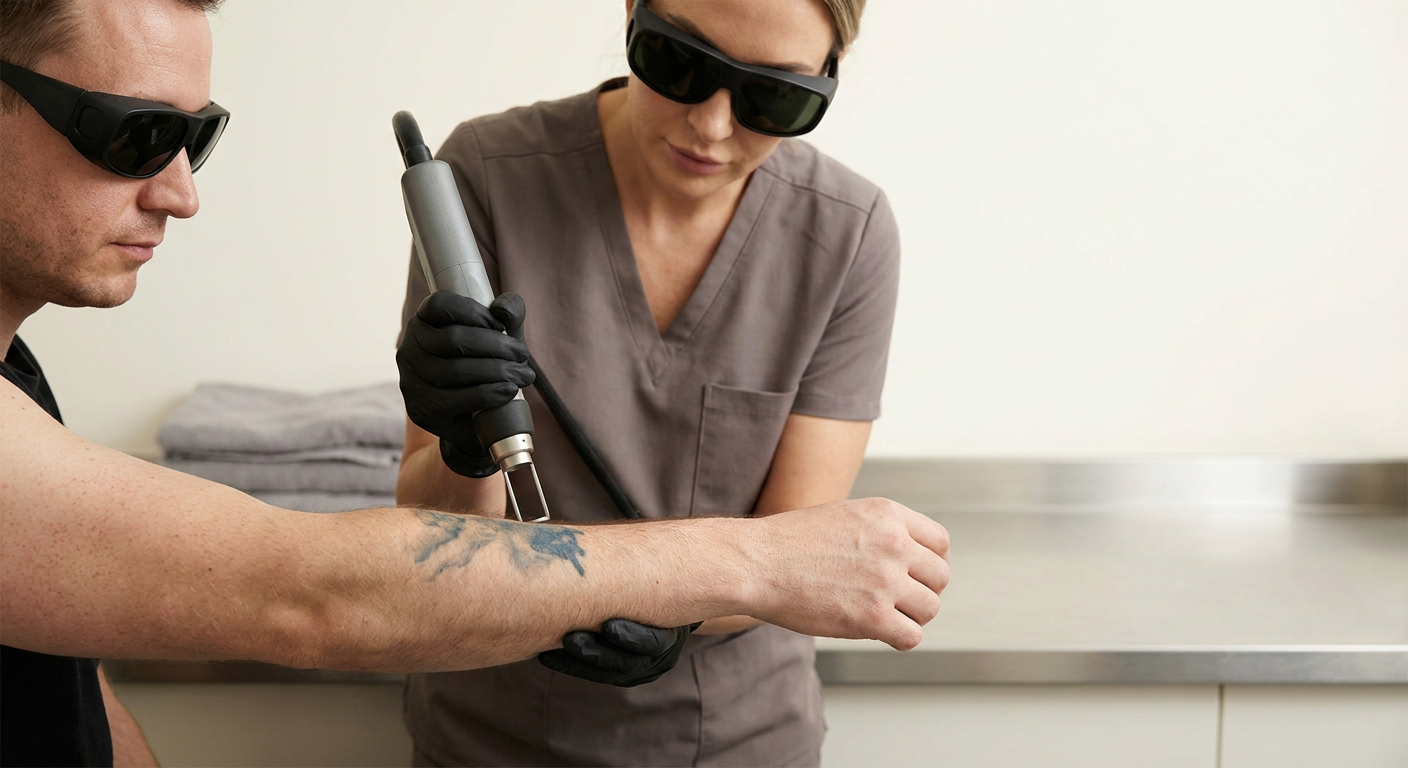
Table of Contents
- What Is Laser Tattoo Removal vs Surgical Excision?
- Laser Tattoo Removal vs Surgical Excision: Key Differences
- Surgical Tattoo Removal Recovery Time and Aftercare
- Laser Tattoo Removal Side Effects and Risks
- Cost of Tattoo Removal Methods: Laser vs Surgery
- Ideal Candidates: Who Should Choose Each Method?
- Scarring, Skin Texture, and Long-Term Outcomes
- Professional Tattoo Removal at Our Pontyclun and Talbot Green Clinics
Laser Tattoo Removal vs Surgical Excision: Which Works Best?
Last Updated: July 10, 2026
When choosing between laser tattoo removal and surgical excision, you're weighing two fundamentally different approaches with distinct trade-offs in recovery time, scarring risk, and suitability for different tattoo types. The right choice depends entirely on your tattoo's characteristics and what you're willing to accept in terms of downtime and outcome.
What Is Laser Tattoo Removal vs Surgical Excision?
Laser tattoo removal uses focused light energy to break down tattoo pigment into particles small enough for your body's lymphatic system to clear naturally. Surgical excision physically cuts out the tattooed skin and stitches the surrounding skin together, a one-and-done procedure that removes the tattoo immediately but leaves a permanent surgical scar.
Laser works best on medium-sized, single or multi-colour tattoos where some scarring risk is acceptable. Surgery works best on small, isolated tattoos where you're willing to trade immediate removal for a linear scar.
How Laser Tattoo Removal Works
Laser tattoo removal relies on selective photothermolysis, where the laser's wavelength targets ink particles without significantly damaging surrounding skin. Modern systems like the Cynosure PicoSure Pro use picosecond technology, laser pulses lasting only trillionths of a second, that shatter ink into microscopic fragments through pressure-wave technology rather than heat alone.
Your body's immune system recognises these fragments as foreign matter and gradually clears them through the lymphatic system over weeks and months. Most tattoos require 6 to 12 treatments spaced 6 to 8 weeks apart, as each session removes only a portion of the pigment. Darker inks (black, blue) respond faster than lighter colours (yellow, green, red), which is why multi-colour tattoos often take longer to fade completely.
How Surgical Excision Works
Surgical excision uses a sterile surgical blade to cut out the entire tattooed area under local anaesthesia. The surgeon removes the skin containing the tattoo down to the subcutaneous layer, then closes the wound with stitches. The result is immediate removal, but a permanent linear scar remains.
This method works best for small tattoos (typically under 2-3 cm) because the surgeon must close the resulting wound without excessive tension on surrounding skin. For larger tattoos, surgeons sometimes combine excision with skin grafting, where skin from another body area is transplanted to cover the wound. The graft itself can appear slightly different in colour and texture.
Laser Tattoo Removal vs Surgical Excision: Key Differences
Laser removal is non-invasive with no cutting, stitches, or grafting. You walk out the same day with minimal recovery: mild redness and swelling for a few hours to days, similar to a sunburn. Most people return to normal activities immediately, though you should avoid sun exposure and intense exercise for a week. Scarring is rare, though hypopigmentation (lightened skin) or hyperpigmentation (darkened skin) can occur, particularly in darker skin tones.
Surgical excision is invasive and requires local anaesthesia. Recovery takes 1 to 2 weeks as the wound heals and stitches are removed. You must keep the wound clean and dry, avoid strenuous activity, and follow post-operative care instructions carefully. The trade-off is speed: one procedure removes the tattoo completely. However, you're guaranteed a permanent surgical scar.
| Aspect | Laser Removal | Surgical Excision |
|---|---|---|
| Invasiveness | Non-invasive | Invasive (surgical) |
| Sessions required | 6-12 (typically) | 1 (one-and-done) |
| Recovery time | 1-7 days | 1-2 weeks |
| Scarring risk | Rare (mainly colour changes) | Permanent linear scar |
| Best for | Medium to large tattoos | Small, isolated tattoos |
| Downtime | Minimal (return same day) | Moderate (restricted activity 1-2 weeks) |
| Cost | Multiple sessions required | Single procedure |
| Suitable skin types | All (though darker skin needs careful wavelength selection) | All |
Surgical Tattoo Removal Recovery Time and Aftercare
If you choose surgical excision, the wound is closed with stitches (usually dissolvable or removed after 7-10 days). For the first 48 hours, expect swelling, bruising, and mild pain, manageable with over-the-counter pain relief and ice packs applied for 15 minutes at a time.
For the first week, keep the wound clean and dry. Wash gently with mild soap and water, pat dry, and apply any antibiotic ointment your surgeon recommends. Avoid submerging the wound in water and don't expose it to direct sunlight. By week two, stitches come out and the wound closes more firmly. Redness and swelling gradually decrease over the following weeks and months, though the scar remains permanently. Initially it may appear red or slightly raised, but most surgical scars fade and flatten over 6 to 12 months as collagen remodels.
Laser Tattoo Removal Side Effects and Risks
Laser tattoo removal is generally safe. The most common side effects are temporary: redness, swelling, and mild discomfort immediately after treatment, similar to a sunburn, resolving within a few hours to days.
More persistent side effects include hypopigmentation (white or lightened patches) and hyperpigmentation (darkened patches), occurring in roughly 10% of treatments and more common in darker skin tones. These colour changes usually fade gradually over weeks to months. Allergic reactions to tattoo ink are rare but possible, with some people's immune systems reacting negatively to specific ink pigments, causing prolonged inflammation or granulomas (small nodules of inflamed tissue).
Scarring after laser treatment is uncommon but can happen if the skin becomes infected or if you don't follow aftercare instructions. Blistering and crusting are normal parts of healing and typically resolve without scarring if left alone. The risk of keloid scarring (thick, raised scars extending beyond the original wound) is low with laser treatment but higher in individuals with a genetic predisposition to keloid formation.
Cost of Tattoo Removal Methods: Laser vs Surgery
Surgical excision is typically a single procedure, but laser removal requires multiple sessions, which adds up over time. Laser pricing depends on the tattoo's size, colour complexity, and number of sessions needed. Surgical excision typically costs less per procedure than a single laser session, but you're paying for one invasive surgery with permanent scarring versus multiple non-invasive treatments with minimal scarring risk. Insurance rarely covers either procedure unless the tattoo is being removed for medical reasons.
Ideal Candidates: Who Should Choose Each Method?
Laser removal is ideal for:
- Large or medium-sized tattoos covering more than a few centimetres
- Multi-colour tattoos with reds, greens, or yellows
- People who want minimal downtime and can commit to 6-12 appointments
- Those who prioritise avoiding permanent scarring
- Clients with darker skin tones (when treated by a practitioner experienced with darker skin)
Surgical excision is ideal for:
- Small, isolated tattoos (under 2-3 cm)
- Simple, single-colour tattoos in areas where a linear scar is cosmetically acceptable
- People who want immediate removal and can tolerate 1-2 weeks of restricted activity
- Those willing to accept a permanent scar in exchange for one procedure
- Tattoos on areas where a scar blends naturally (such as along the hairline or within skin creases)
The decision hinges on your tattoo's size, your pain tolerance, your timeline, and your scar acceptance.
Scarring, Skin Texture, and Long-Term Outcomes
Surgical excision guarantees a permanent linear scar; laser treatment rarely causes scarring but can result in subtle colour changes. The scar's appearance depends on the surgeon's technique, your skin type, the scar's location, and your body's natural healing response. Darker skin types are more prone to hypertrophic (thickened, raised) scars and keloids.

Laser treatment occasionally causes atrophic scars (depressions in the skin) if the laser penetrates too deeply or if infection occurs, but these are uncommon with qualified practitioners. More common are temporary colour changes that usually fade over months.
Long-term outcomes favour laser removal for most people. After 12 months, a successfully treated tattoo has typically faded by 75-90%, with minimal visible scarring. A surgical scar remains visible indefinitely, though it does fade and flatten over time. Laser treatment preserves natural skin texture in the treated area, while grafted skin often has a slightly different texture or colour match.
Professional Tattoo Removal at Our Pontyclun and Talbot Green Clinics
When you're ready to move forward, choosing a qualified practitioner matters enormously. At Vale Laser Aesthetics, our team at our clinic on Talbot Road, Talbot Green, RCT CF72 8AE, is HIW-approved and fully trained in advanced laser tattoo removal using medical-grade technology.
We've carried out over 20,000 treatments using picosecond laser systems that minimise scarring risk and work efficiently on multi-colour tattoos. Every client begins with a free consultation, where we assess your tattoo's size, colour, depth, and location, then recommend the most appropriate treatment plan. We discuss realistic expectations, how many sessions you'll likely need, and any risks specific to your skin type and tattoo characteristics.
Choosing between laser tattoo removal and surgical excision depends on your tattoo's size, your timeline, and your scar tolerance. Laser removal offers a non-invasive path with minimal scarring risk but requires multiple sessions over several months. Surgical excision provides immediate removal but guarantees a permanent scar and requires recovery time.
If you're ready to explore your options, Vale Laser Aesthetics offers a free, no-obligation consultation at our Talbot Green clinic. Contact us at 67 Talbot Road, Talbot Green, RCT CF72 8AE, or visit our website to book your appointment.
Frequently Asked Questions
Is laser tattoo removal better than surgical excision?
Neither method is universally better, it depends on your tattoo's size, location, and colour. Laser tattoo removal suits larger, multi-coloured tattoos and avoids scarring, but requires multiple sessions. Surgical excision removes small tattoos in one procedure but leaves a permanent surgical scar. At our Talbot Green clinic, we assess your individual case during a free consultation to recommend the best approach for your specific tattoo.
What is the recovery time for laser tattoo removal vs surgical excision?
Laser tattoo removal typically involves minimal downtime, most patients resume normal activities within days, though the skin may remain slightly red or swollen. Surgical excision requires 1-2 weeks of wound care and suture removal, with full healing taking 3-4 weeks. Laser treatment spans multiple sessions over months, whilst surgical excision is a one-time procedure. Our HIW-approved practitioners at our Pontyclun clinic provide detailed aftercare guidance for either method.
Does surgical tattoo removal leave a scar?
Yes, surgical excision always leaves a permanent surgical scar, though its appearance depends on the surgeon's technique, wound healing, and your skin type. Some patients develop keloid scarring or wider scars. Laser tattoo removal avoids this risk but may cause temporary skin irritation, hyperpigmentation, or rarely, hypopigmentation. If scarring concerns you, laser removal is generally the better choice. We discuss scarring risks openly during your free consultation at Vale Laser Aesthetics.
How many laser sessions does it take to remove a tattoo compared to surgical excision?
Laser tattoo removal typically requires 6-15 sessions spaced 6-8 weeks apart, depending on ink colour, depth, and size. Surgical excision removes the tattoo in one procedure. However, surgical excision is only practical for small tattoos; large designs require multiple excisions or skin grafts. Laser treatment is non-invasive and works on any size, making it more versatile. Our team at our clinic on Talbot Road, Talbot Green, can estimate session numbers during your consultation.