Hair Removal
Laser Hair Removal vs Electrolysis — Which is Right for You?
Not sure whether to choose laser hair removal or electrolysis? Our experts explain the differences, costs, results and which treatment suits your hair type.
Mandy Davis · 8 June 2026 · 8 min read
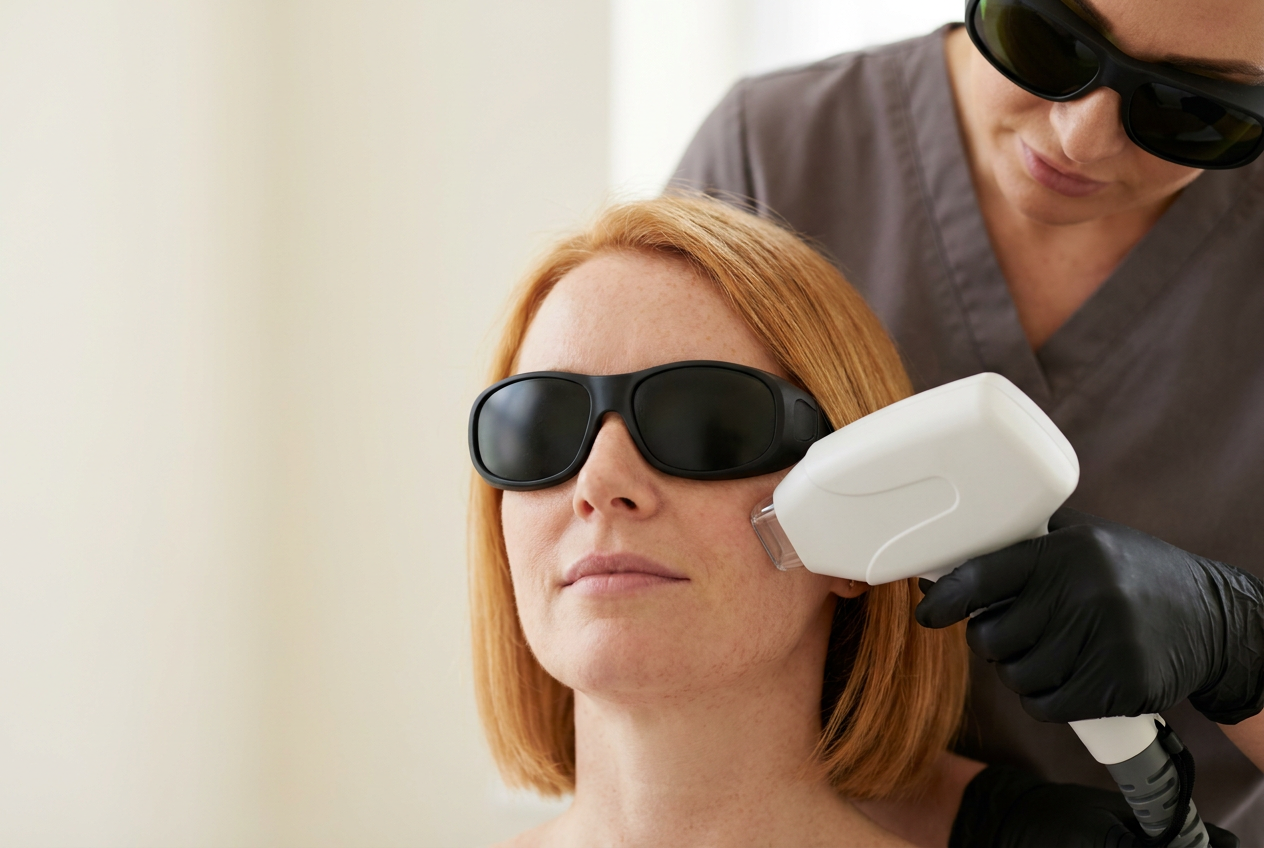
Table of Contents
- How Laser Hair Removal Actually Works
- How Electrolysis Actually Works
- Laser vs Electrolysis — At a Glance
- Watch the Comparison in 90 Seconds
- When to Choose Laser Hair Removal
- When to Choose Electrolysis
- Can You Combine Both Treatments?
- Cost & Long-Term Value
- The Honest Bottom Line
- Frequently Asked Questions
Last Updated: 8 June 2026
"Should I have laser hair removal or electrolysis?" is one of the most common questions we are asked in consultation across our Cardiff Gate, Pontyclun and Whitchurch clinics. Both are proven, clinically robust methods of long-term hair removal, but they work very differently — and the right choice depends on your hair colour, skin tone, the area you want treated and the result you are after.
At Vale Laser Aesthetics we offer both, so we have no reason to push you towards one over the other. This guide walks you through the honest pros, cons and ideal candidates for each — exactly the advice we would give you across the consultation room.
How Laser Hair Removal Actually Works
Laser hair removal uses concentrated light energy that is selectively absorbed by the melanin (pigment) inside the hair shaft. That light converts to heat, travels down the hair into the follicle and disables the cells responsible for regrowth. Because it relies on contrast between the dark hair and the surrounding skin, it works best on hair that carries pigment — meaning browns and blacks.
At Vale Laser we use the medical-grade Soprano Ice Platinum diode laser. Its "in-motion" handpiece glides continuously across the skin with built-in contact cooling, which makes the treatment feel warm rather than sharp and — crucially — makes it safe across the full Fitzpatrick scale, including deeper skin tones that older alexandrite or IPL devices struggle with.

How Electrolysis Actually Works
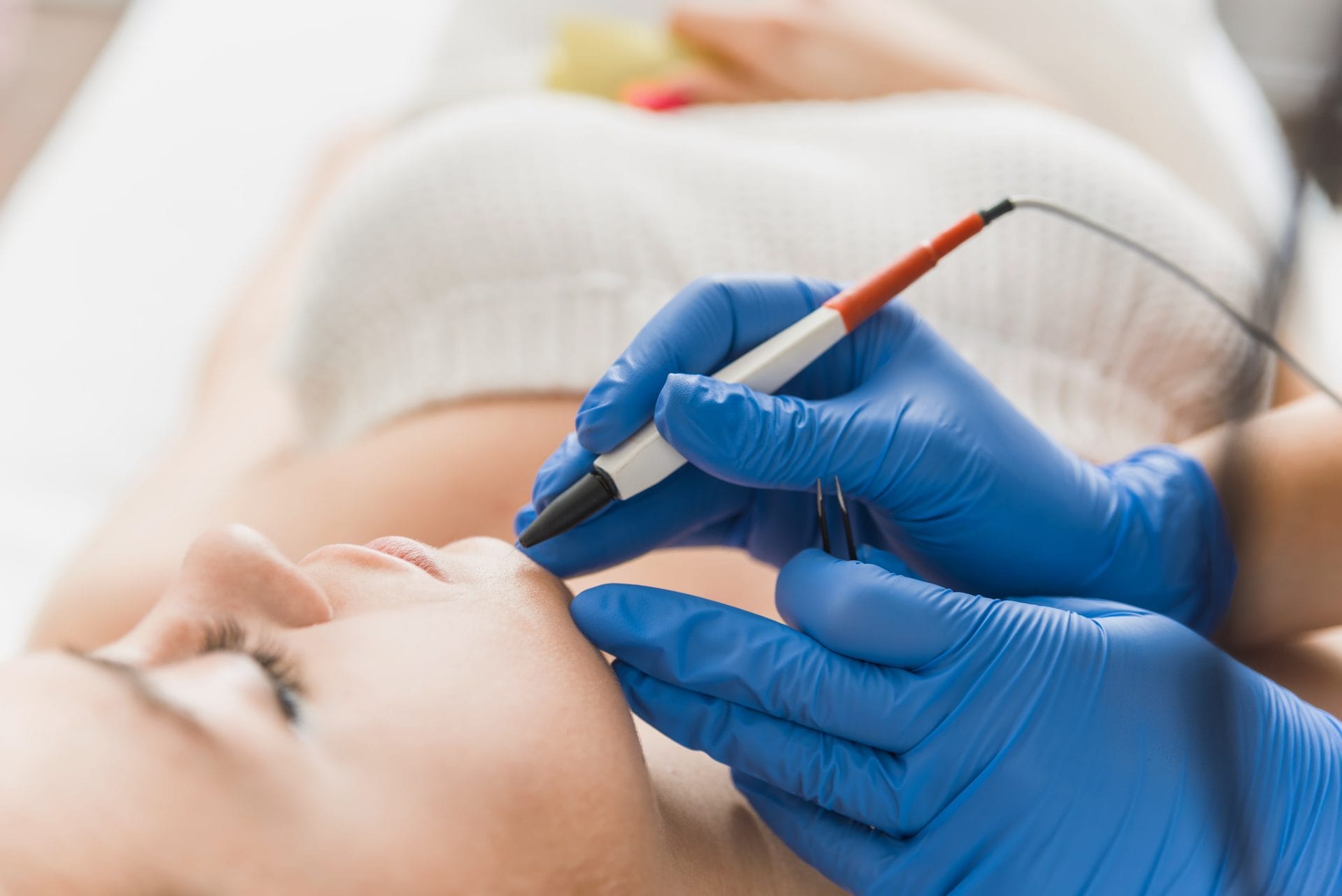
Electrolysis takes a completely different approach. A very fine probe — finer than a human hair — is slipped down each follicle alongside the hair, and a small, precisely controlled current is delivered that permanently destroys the follicle's ability to regrow. Because it doesn't rely on pigment, it works on every hair colour: blonde, red, grey, white, fine vellus hair, everything.
This is why electrolysis is the only method of hair removal legally allowed to be called permanent in the UK and US. The trade-off is that it works one follicle at a time, so it is slower than laser and best suited to smaller, precise areas or to hairs that laser simply cannot see.
Laser vs Electrolysis — At a Glance
The table below summarises the differences that matter most in clinic.
| Feature | Laser Hair Removal | Electrolysis |
|---|---|---|
| How it works | Light energy targets pigment in the follicle | Fine probe delivers a current to each follicle individually |
| Works on which hair | Dark hair (brown / black) only | Every hair colour — blonde, grey, red, white |
| Works on which skin | All skin tones I–VI with Soprano Ice Platinum | All skin tones |
| Best for | Larger areas — legs, back, underarms, bikini | Small, precise areas — upper lip, chin, eyebrows, stray hairs |
| Typical course | 6–10 sessions, 4–6 weeks apart | Multiple sessions, weekly at first |
| Permanence | Permanent reduction (typically 80–95%) | The only method classed as permanent removal |
| Comfort | Cool and almost painless in motion | A brief sting per follicle |
| Cost | Higher per session, fewer sessions overall | Lower per session, more sessions overall |
Watch the Comparison in 90 Seconds
If you prefer to see the two treatments side by side, this short explainer covers the essentials.
When to Choose Laser Hair Removal
Laser hair removal is almost always the better choice when you are treating a larger area and your hair carries enough pigment for the light to target. Because laser treats many follicles at once, it is far quicker — a full set of legs takes around 30–40 minutes rather than the many hours electrolysis would require for the same surface area.
Choose laser if:
- You have dark hair (brown or black) on the area you want treated
- You want to clear a larger area — legs, back, chest, underarms, full bikini
- You want significant long-term reduction quickly, with fewer total sessions
- You have any skin tone — our Soprano Ice Platinum is safe for skin types I–VI
- You want a virtually painless experience with cooled, in-motion technology
When to Choose Electrolysis
Electrolysis is the right choice when laser simply cannot see the hair — typically blonde, grey, red or white hairs that carry too little melanin. It is also our go-to for delicate precision work, for the few stubborn hairs left after a course of laser, and for clients undergoing gender-affirming care where every follicle matters.
Choose electrolysis if:
- Your hair is blonde, red, grey or white — no pigment for laser to target
- You want truly permanent removal of every treated follicle
- You have a small, precise area — upper lip, chin, eyebrows, stray hairs
- You are undergoing transgender hair removal where laser is unsuitable
- You have a few stubborn hairs remaining after a course of laser
Can You Combine Both Treatments?
Absolutely — and in many cases we recommend it. A typical combined plan looks like this: start with a course of laser hair removal to clear 80–95% of the dark hair across the area, then finish with a short course of electrolysis to permanently remove any remaining pale or stubborn follicles. This combined approach gives the fastest, most thorough and most cost-effective long-term result.

Cost & Long-Term Value
Per session, laser is the more expensive of the two — but you need far fewer sessions to clear a given area. Electrolysis sessions are cheaper individually, but because they treat one follicle at a time, a large area can run into many more hours overall.
The genuinely cost-effective approach for most clients is laser-first on larger areas, then electrolysis as a finishing tool. For small areas where the hair is already pale (a few chin or upper-lip hairs, for example), electrolysis on its own is usually the smartest spend.
The Honest Bottom Line
Most clients with dark hair on larger areas should start with laser. Most clients with fine, pale or grey hair, or who need surgical-level precision, should choose electrolysis. And many people achieve their best long-term result by using both — in that order.
If you are not sure which camp you fall into, come in for an honest, no-pressure consultation. We will examine your hair and skin, talk through your goals and put together a clear plan and price — laser, electrolysis, or both.
Frequently Asked Questions
What is the difference between laser hair removal and electrolysis?
Laser hair removal uses light energy to target pigment in many follicles at once, delivering long-term hair reduction across larger areas. Electrolysis uses a fine probe and electric current to destroy each follicle individually and is the only method legally classed as permanent hair removal. Laser is faster and ideal for dark hair; electrolysis works on every hair colour, including blonde, red, grey and white.
Which is better for the face — laser or electrolysis?
For dark facial hair on the upper lip, chin or jawline, laser is usually the most efficient first step. For fine, blonde, grey or white facial hair — or for stray hairs left after a laser course — electrolysis is the better choice because it does not rely on pigment to work.
Is laser or electrolysis more painful?
Modern in-motion diode lasers like the Soprano Ice Platinum feel warm rather than sharp, and most clients describe them as comfortable. Electrolysis produces a brief sting per follicle. Because electrolysis treats one hair at a time, sessions on small areas can feel more intense overall, but each individual sensation is short.
Can I combine laser hair removal and electrolysis?
Yes, and it is often the most effective approach. A typical plan uses laser to clear 80–95% of dark hair from larger areas, then finishes with electrolysis to remove any remaining pale, fine or stubborn follicles for a truly thorough result.
Is laser hair removal safe for darker skin tones?
With our Soprano Ice Platinum diode laser, yes. It is FDA-cleared for all skin types I–VI thanks to its in-motion delivery and contact cooling, which protect the surrounding skin while heating the follicle. A patch test is always carried out at consultation.