ultimate-guide
Laser Hair Removal for Dark Skin: Your 2026 Guide
Mandy Davis · 19 June 2026 · 15 min read
Table of Contents
- Why Laser Hair Removal for Dark Skin Requires a Different Approach
- Nd:YAG Laser for Dark Skin: The Gold Standard Explained
- How Many Laser Hair Removal Sessions Does Dark Skin Need?
- Laser Hair Removal Preparation for Dark Skin: What to Do Before Your Session
- Laser Hair Removal Side Effects on Dark Skin and How to Minimise Them
- Contraindications and Medical Screening: Is Laser Hair Removal Safe for You?
- Laser Hair Removal for Dark Skin at Vale Laser Aesthetics, South Wales
- Conclusion
Last Updated: June 16, 2026
Choosing the wrong laser for darker skin tones is not just ineffective, it can cause lasting damage. Laser hair removal for dark skin requires specific wavelengths and protocols that most generic guides gloss over. At Vale Laser Aesthetics, we've worked with hundreds of clients across South Wales with Fitzpatrick skin types IV through VI, and this guide covers exactly what you need to know before booking a session: which technology is safe, how many sessions to expect, how to prepare, and where most clinics get it wrong.
The core issue is melanin. Darker skin contains more melanin not just in the hair follicle but in the surrounding tissue. Many older laser systems target melanin broadly, meaning the skin absorbs energy alongside the follicle. The result can be burns, hyperpigmentation, or hypopigmentation, which is why laser hair removal for dark skin demands a clinician who understands both the technology and the physiology.
Why Laser Hair Removal for Dark Skin Requires a Different Approach
The Fitzpatrick scale classifies skin into six types based on melanin content, and types IV through VI present a genuine clinical challenge. The fundamental principle, selective photothermolysis, requires laser energy to be absorbed by the hair follicle without damaging surrounding tissue. With higher epidermal melanin, that selectivity becomes much harder to achieve.
Shorter wavelength lasers like the Alexandrite (755nm) work well on lighter skin because follicle melanin absorbs energy preferentially. On darker skin, epidermal melanin competes for that same energy, significantly increasing thermal injury risk. Longer wavelengths penetrate deeper and are absorbed less aggressively by epidermal melanin, which is why the Nd:YAG (1064nm) has become the clinical standard for dark skin tones.
A common mistake is booking a consultation without asking which laser the clinic uses. If a clinic cannot confirm the wavelength of their device or its suitability for Fitzpatrick IV-VI, that is a red flag. According to British Association of Dermatologists guidance on laser safety, skin type assessment is a foundational requirement before any laser treatment.
Nd:YAG Laser for Dark Skin: The Gold Standard Explained
The Nd:YAG laser is the most clinically validated choice for dark skin, operating at 1064nm, a wavelength poorly absorbed by epidermal melanin but sufficient to heat and disable the hair follicle. That distinction is what makes it safe for skin types IV through VI where other systems are contraindicated.
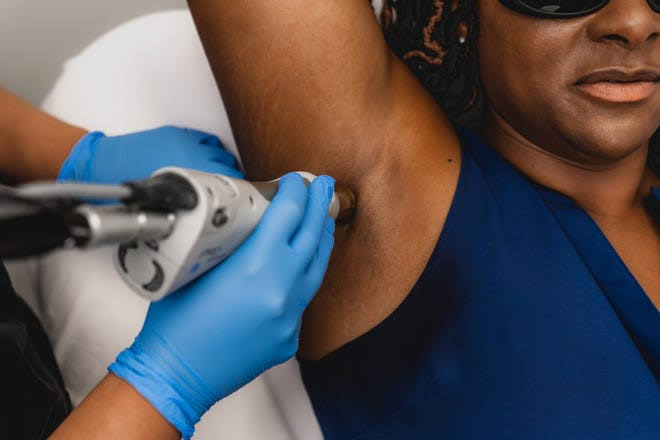
The 1064nm beam passes through the epidermis with minimal absorption, reaching the follicle where it converts to heat and disrupts the hair growth cycle. Longer pulse durations further protect the epidermis by allowing heat to dissipate gradually. In practice, Nd:YAG treatments on darker skin use longer pulse widths and slightly lower fluences, this is the correct protocol, not a compromise. Practitioners who push fluence to accelerate results on dark skin create unnecessary risk.
Nd:YAG vs Alexandrite vs Motus Pro: Which Laser Type Is Right for You?
For dark skin the hierarchy is clear. Here is a direct comparison:
| Laser Type | Wavelength | Suitable for Dark Skin | Key Advantage | Key Limitation |
|---|---|---|---|---|
| Nd:YAG | 1064nm | Yes (IV-VI) | Safest for high melanin | Slightly less efficient per session |
| Alexandrite | 755nm | No (I-III only) | Fast, highly effective on light skin | High epidermal melanin absorption risk |
| Diode | 810nm | Partial (IV max) | Good speed and coverage | Caution needed above type IV |
| Motus Pro (Moveo) | 755nm/1064nm | Yes (with Moveo) | Near pain-free via sliding motion | Requires experienced practitioner |
The Motus Pro with Moveo technology uses a sliding applicator that distributes energy more evenly, reducing peak thermal load at any single point. This makes Alexandrite wavelengths safer on darker skin than traditional static systems allow. For most clients with skin types IV-VI, Nd:YAG remains the first-line recommendation; Motus Pro with Moveo is an excellent alternative, particularly for clients who prioritise comfort.
How Many Laser Hair Removal Sessions Does Dark Skin Need?
Most clients with darker skin tones require 6 to 10 sessions for significant permanent hair reduction, slightly more than the 4-6 often cited for lighter skin. The reason is straightforward: conservative energy settings keep each session safe but remove a lower percentage of active follicles per visit.
Hair grows in cycles, anagen (growth), catagen (transition), and telogen (resting), and laser treatment only affects follicles in the active anagen phase. Because only a fraction of follicles are in anagen at any time, multiple sessions spaced 4-8 weeks apart are required to catch each follicle during its vulnerable window.
Factors That Affect Your Course of Treatments
Several variables influence the total sessions needed:
- Treatment area: Facial and bikini areas often respond faster than legs or back due to differences in hair density and follicle depth.
- Hair colour and coarseness: Coarser, darker hair responds better; fine or light-coloured hair is harder to target effectively.
- Hormonal factors: Conditions like PCOS can drive continued hair growth, requiring maintenance sessions beyond the initial course.
- Practitioner skill: Correct energy calibration for your skin type makes a measurable difference to per-session efficacy.
- Consistency between sessions: Sticking to recommended intervals keeps follicles in their optimal treatment window.
A realistic expectation is 6-8 sessions for most body areas, with a review consultation after session 4 to assess progress and adjust the plan if needed.
Laser Hair Removal Preparation for Dark Skin: What to Do Before Your Session
Preparation for dark skin is more involved than for lighter skin types. The goal is to minimise epidermal melanin before treatment, reducing competition between skin and follicle for laser energy.
Follow this pre-treatment checklist:
- Avoid sun exposure for at least 4 weeks before each session. Tanned skin has elevated epidermal melanin, significantly increasing burn risk.
- Stop fake tan and self-tanning products for a minimum of 2 weeks before treatment.
- Shave the treatment area 24-48 hours before your appointment. Surface hair absorbs energy that should reach the follicle.
- Do not wax, thread, or use depilatory creams for at least 4-6 weeks before treatment. These remove the follicle the laser needs to target.
- Avoid retinoids and chemical exfoliants (AHAs, BHAs) for 5-7 days before treatment to reduce skin sensitivity.
- Apply SPF 30+ daily in the weeks leading up to treatment, especially on exposed areas.
- Attend your consultation and disclose all medications, particularly antibiotics and photosensitising drugs.
Consistency across all sessions matters as much as the first appointment. A client who arrives tanned for session 3 after being careful for sessions 1 and 2 risks not just that session but their cumulative results.
Laser Hair Removal Side Effects on Dark Skin and How to Minimise Them
Side effects from laser hair removal on dark skin are real but largely preventable with the right technology and practitioner. The most common issues are post-inflammatory hyperpigmentation (PIH), temporary redness, and follicular oedema.
PIH occurs when the skin's inflammatory response to heat triggers excess melanin production, leaving darker patches in the treated area. Risk is highest when inappropriate laser settings are used, when skin is tanned at treatment time, or when aftercare is not followed. According to guidance from the Laser and Health Academy on skin phototypes, proper Fitzpatrick assessment and wavelength selection are the primary preventive measures against PIH.
Temporary side effects resolving within 24-72 hours: redness and warmth, mild follicular swelling, temporary darkening of treated hairs before shedding.
Side effects requiring clinical review: blistering or crusting, persistent hyperpigmentation beyond 2 weeks, hypopigmentation.
Post-Treatment Aftercare Guide for Dark Skin Tones
Immediate aftercare (0-48 hours):
- Apply a cool compress or aloe vera gel to reduce heat and inflammation
- Avoid hot showers, saunas, and exercise for 48 hours
- Do not apply makeup or fragranced products to treated facial areas
- Use a gentle, fragrance-free moisturiser
Ongoing aftercare (days 3-28):
- Apply SPF 50+ to any treated area exposed to daylight, without exception
- Avoid picking or exfoliating over treated skin as hairs shed
- Do not wax or thread between sessions
- If PIH appears, consult your practitioner before the next session, do not self-treat with over-the-counter skin lightening products without guidance
Contraindications and Medical Screening: Is Laser Hair Removal Safe for You?
Medical screening before laser hair removal is a clinical requirement, and any reputable clinic will conduct a thorough consultation before treating you.
Absolute contraindications (treatment should not proceed):
- Active skin infections or open wounds in the treatment area
- Photosensitising medications (certain antibiotics, isotretinoin, some antidepressants)
- Active herpes simplex in the treatment area
- Pregnancy
Relative contraindications (require clinical assessment and possible protocol adjustment):
- History of keloid scarring, particularly relevant for darker skin types, which have a higher incidence of keloid formation
- Recent sun exposure or active tan
- Hormone-driven hair growth conditions (PCOS, Cushing's syndrome)
- Certain autoimmune conditions
The keloid risk deserves direct attention. Clients with skin types V and VI have a statistically higher tendency toward keloid scarring. This does not rule out laser treatment, but the practitioner must know, assess the risk, and potentially adjust settings or avoid certain areas. Transparency with your practitioner is essential.
As noted by the Healthcare Inspectorate Wales on clinic registration standards, HIW-registered clinics are required to maintain clinical governance standards including pre-treatment medical screening. Choosing a HIW-approved clinic is a baseline safety requirement.
Laser Hair Removal for Dark Skin at Vale Laser Aesthetics, South Wales
Vale Laser Aesthetics operates three clinics across South Wales, including the Pontyclun location, and has delivered over 5,000 successful treatments to clients across the region. The clinics are fully HIW-approved and all practitioners are qualified to clinical standards, which matters specifically because laser hair removal on darker skin requires more than a basic aesthetics certificate.
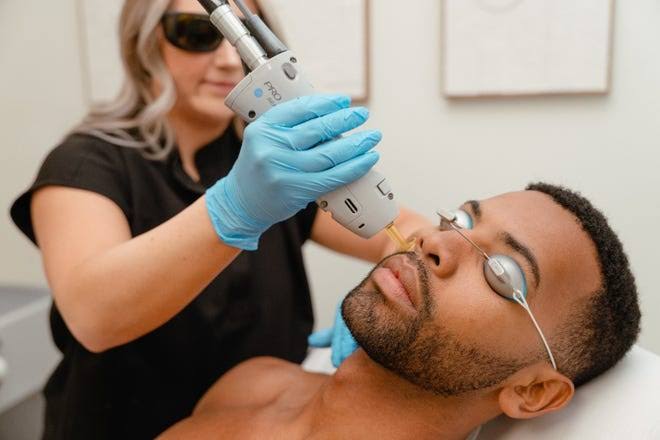
The medical-grade, FDA-approved technology at Vale Laser Aesthetics is selected to handle the full range of skin types safely. For clients searching for laser hair removal for dark skin near me in the Pontyclun, Cardiff, or Swansea areas, Vale Laser Aesthetics offers free, no-obligation consultations where your Fitzpatrick skin type is assessed and a personalised treatment plan developed before any session is booked. The combination of HIW registration, clinical-grade equipment, and 230+ five-star reviews from clients who have completed full courses is verifiable, not a marketing claim.
Treatment Areas, Pricing, and Finance Options
Vale Laser Aesthetics treats all standard body areas with protocols adjusted for each client's skin type and hair characteristics.
Common treatment areas:
- Facial hair (upper lip, chin, full face)
- Bikini line and Brazilian
- Underarms
- Legs (lower, upper, or full)
- Back and chest
- Arms
Pricing varies by treatment area and number of sessions. Vale Laser Aesthetics offers transparent pricing with monthly payment and finance options, making a full course accessible without paying upfront. Exact pricing is confirmed at your free consultation, as recommendations depend on your individual skin type, hair density, and treatment area. For clients with darker skin types who have previously been told laser treatment is not suitable for them, this consultation is particularly important, the right technology and practitioner change that conversation entirely.
According to NHS guidance on cosmetic procedures and choosing a practitioner, patients should always verify that cosmetic laser practitioners are appropriately qualified and that the clinic operates under recognised regulatory oversight before proceeding with any aesthetic treatment.
Frequently Asked Questions
Is laser hair removal safe for dark skin?
Yes, laser hair removal is safe for dark skin when performed with the correct technology and by a qualified practitioner. The key is using a laser with a longer wavelength, such as the Nd:YAG, which bypasses melanin in the skin and targets the hair follicle directly. At a HIW-registered clinic like Vale Laser Aesthetics, every client undergoes a thorough consultation and medical screening before treatment begins, ensuring the safest possible approach for your individual skin type.
Which laser is best for dark skin hair removal?
The Nd:YAG laser is widely regarded as the most suitable laser for darker skin tones. Its longer 1064nm wavelength means it is less absorbed by the melanin in the skin's surface, significantly reducing the risk of burns or hyperpigmentation. The Motus Pro with Moveo technology is another excellent option, combining Alexandrite and Nd:YAG capabilities for a more comfortable, pain-free experience. A qualified practitioner will assess your Fitzpatrick skin type during consultation to recommend the right laser for you.
Does laser hair removal cause hyperpigmentation on dark skin?
Hyperpigmentation is a known risk if the wrong laser type or incorrect settings are used on darker skin tones. Using an Nd:YAG laser with appropriate energy settings, combined with proper skin preparation and aftercare, greatly reduces this risk. You can further minimise it by avoiding sun exposure before and after sessions, not using heat-based treatments in the days following your appointment, and following your practitioner's full aftercare guidance carefully.
How many sessions of laser hair removal are needed for dark skin?
Most clients with darker skin tones require between 6 and 10 sessions to achieve significant permanent hair reduction. The exact number depends on the treatment area, hair thickness, hormonal factors, and how well the hair follicles respond to each session. Sessions are typically spaced four to eight weeks apart to align with the hair growth cycle. Your practitioner will outline a personalised treatment plan during your free consultation, giving you a realistic expectation for your course of treatments.
What should I avoid before laser hair removal on dark skin?
Before your laser hair removal session, avoid sun exposure and fake tan for at least four weeks, as increased melanin in the skin raises the risk of adverse reactions. Do not wax, pluck, or use depilatory creams in the weeks before treatment, as the hair follicle must be intact. Shave the area 24 to 48 hours before your appointment. Avoid retinoids, AHAs, and other active skincare ingredients for several days prior. Always disclose any medications or skin conditions during your consultation.
Is Nd:YAG laser good for dark skin?
Yes, the Nd:YAG laser is considered one of the safest and most effective options for laser hair removal on dark skin. Its longer wavelength penetrates deeper into the skin without being absorbed by surface melanin, which makes it far less likely to cause burns, blistering, or post-inflammatory hyperpigmentation compared to shorter-wavelength lasers like Alexandrite alone. When used by an experienced, HIW-approved practitioner with correct settings, the Nd:YAG can deliver excellent permanent hair reduction results across a wide range of darker skin tones.
Finding a clinic that genuinely understands laser hair removal for dark skin in South Wales is harder than it should be. Vale Laser Aesthetics addresses this directly: three HIW-approved clinics across South Wales, FDA-approved medical-grade laser technology calibrated for all skin types, and over 5,000 clients treated by fully qualified practitioners. Book your free, no-obligation consultation at Vale Laser Aesthetics and get a treatment plan built around your skin type, not a generic protocol.