ultimate-guide
Laser Hair Removal Cost South Wales: 2026 Guide
Mandy Davis · 18 June 2026 · 15 min read
Table of Contents
- Laser Hair Removal Cost in South Wales: What to Expect
- Laser Hair Removal vs Waxing Cost Comparison
- Which Laser Technology Is Right for Your Skin Type?
- How Many Laser Hair Removal Sessions Are Needed?
- Safety, Medical Screening, and Clinical Standards
- Pain Management: What Laser Hair Removal Actually Feels Like
- Laser Hair Removal Aftercare Tips for Best Results
- Why Choose Vale Laser Aesthetics Across South Wales
Last Updated: June 2026
Laser Hair Removal Cost in South Wales: What to Expect
Laser hair removal cost south wales is one of the most searched aesthetic queries in the region, and for good reason: prices vary considerably depending on treatment area, technology, and clinic credentials. This guide from Vale Laser Aesthetics breaks down exactly what you can expect to pay, which laser technology suits your skin type, and how to avoid the costly mistakes that come from choosing on price alone.
Permanent hair reduction is not a luxury reserved for a specific demographic. People across Cardiff, Swansea, Pontyclun, and the surrounding valleys are choosing laser over waxing as a long-term cost strategy. The real question is not whether laser is worth it, but whether the clinic you choose has the right technology and qualified practitioners to deliver safe, effective results on your skin type.
Price Breakdown by Treatment Area
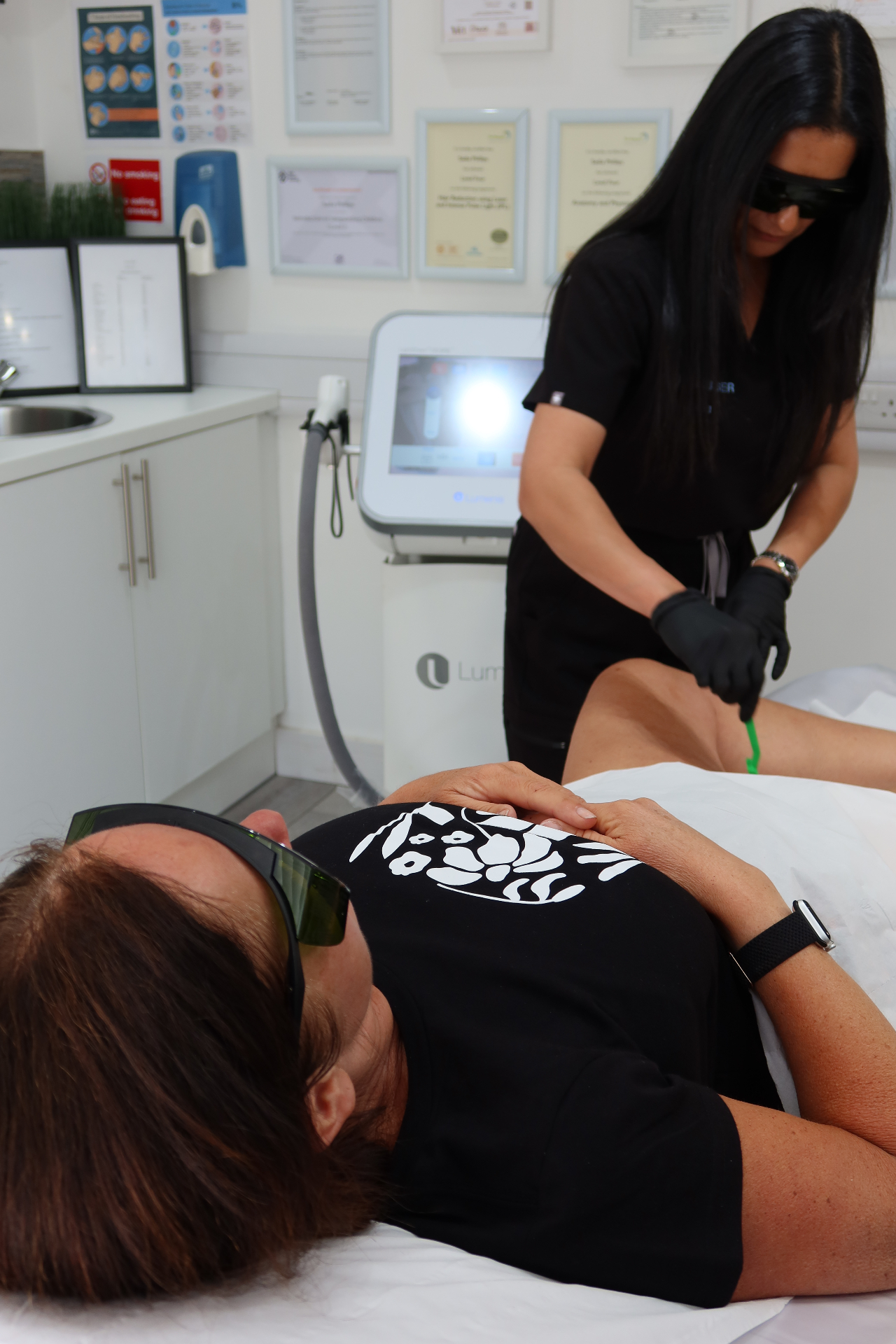
Laser hair removal pricing varies by treatment area, the number of sessions in your course, and the clinic you choose. At Vale Laser Aesthetics, prices start from £34 per session, with your exact cost confirmed at a free, no-obligation consultation once your treatment area and course length are assessed.
Clinics operating with medical-grade technology and HIW-registered practitioners are generally a quality signal worth paying for. A significantly lower price elsewhere can sometimes signal outdated equipment or under-qualified staff, so it is worth asking what technology and qualifications sit behind any quote.
Finance Options and Monthly Payments
Upfront cost should not be a barrier to safe, effective treatment. Many South Wales clinics, including Vale Laser Aesthetics, offer monthly payment plans that spread the cost of a full course across manageable instalments. A six-session course for full legs, for example, can often be structured across six to twelve months, making the monthly outlay comparable to a standard waxing appointment.
When evaluating finance options, check whether the plan is interest-free, what the minimum spend threshold is, and whether you can add treatment areas to an existing plan. A free, no-obligation consultation lets you confirm pricing, suitability, and your full treatment plan before committing to any financial arrangement.
Laser Hair Removal vs Waxing Cost Comparison
The popular assumption is that waxing is cheaper than laser. Over a lifetime, that assumption is wrong.
Waxing requires repeat appointments every four to six weeks, indefinitely. A bikini wax at a South Wales salon requires repeat appointments indefinitely, accumulating significant cost over ten years, plus the time cost of regular appointments and the ongoing problem of ingrown hairs. Laser hair removal delivers permanent hair reduction after a course of six to eight sessions, with only occasional annual top-ups required. For most people, the total lifetime spend on laser is significantly lower than on waxing.
There is also a quality-of-life difference rarely featured in these comparisons. Waxing requires hair regrowth before each appointment. Laser does not, you shave before sessions, so you are never forced to live with visible unwanted hair between treatments.
According to the British Association of Aesthetic Plastic Surgeons' guidance on non-surgical treatments, consumer demand for long-term hair reduction treatments has grown consistently, driven largely by the improving cost-to-result ratio of modern laser systems.
Which Laser Technology Is Right for Your Skin Type?
Not all lasers are created equal, and the technology used matters more than most clinic marketing materials let on.
Nd:Yag vs Alexandrite vs Motus Pro with Moveo Technology
The three dominant laser systems in clinical use across South Wales are Nd:Yag, Alexandrite, and the Motus Pro platform using Moveo technology.
Nd:Yag (1064nm): Operates at a longer wavelength, bypassing melanin in the epidermis to target the hair follicle more safely in darker skin tones. It is the clinical standard for Fitzpatrick skin types IV through VI, though less effective on fine or lighter hair and slightly more uncomfortable than Alexandrite.
Alexandrite (755nm): Highly effective on lighter skin tones (Fitzpatrick types I through III) with dark, coarse hair. The shorter wavelength is absorbed readily by follicular melanin, producing strong results in fewer sessions. Less suitable for tanned or darker skin due to the risk of pigmentation changes.
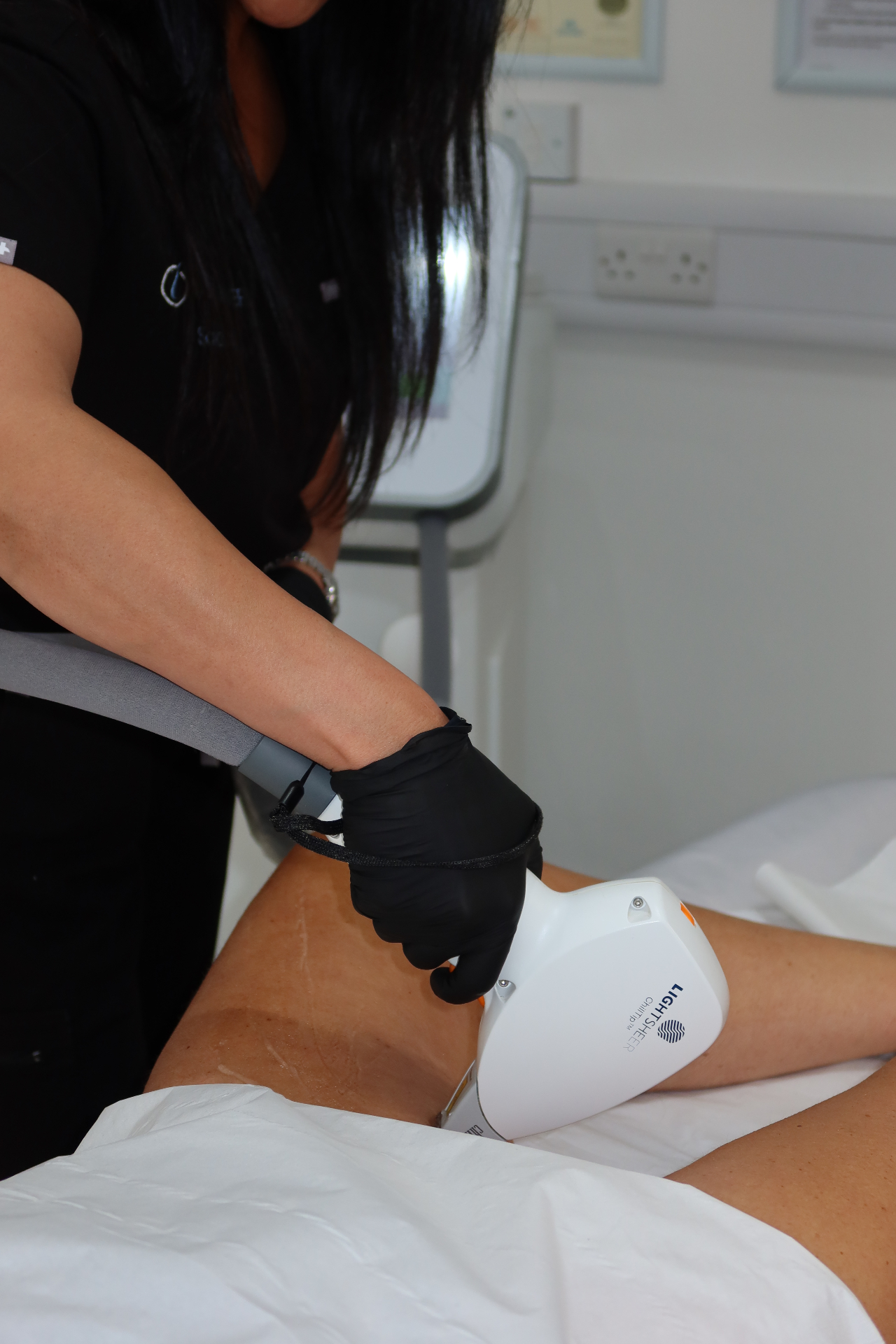
Motus Pro with Moveo Technology: This system changes the conversation. The Motus Pro combines Nd:Yag and Alexandrite wavelengths in a single platform, with Moveo technology delivering energy in a continuous stamping motion rather than individual pulses. The result is a more comfortable treatment across a broader range of skin types, including tanned skin, which most standard lasers cannot safely treat.
Vale Laser Aesthetics uses medical-grade technology to treat clients across all skin types, with treatment plans tailored to individual profiles at the initial consultation.
| Laser Type | Best Skin Tones | Best Hair Types | Comfort Level |
|---|---|---|---|
| Alexandrite (755nm) | Fair to medium (I-III) | Dark, coarse | Moderate |
| Nd:Yag (1064nm) | Medium to dark (IV-VI) | Dark, coarse | Lower |
| Motus Pro / Moveo | All types (I-VI) | Most types | High |
As documented in the British Skin Foundation's guidance on laser treatments for different skin types, selecting the appropriate laser wavelength for a patient's Fitzpatrick skin type is a primary clinical safety consideration, not a secondary one.
How Many Laser Hair Removal Sessions Are Needed?
Most clients require between six and eight sessions to achieve significant permanent hair reduction. The exact number depends on treatment area, hair growth cycle, hair colour, and skin type.
Hair grows in three phases: anagen (active growth), catagen (transition), and telogen (resting). Laser energy only effectively targets follicles in the anagen phase, which is why multiple sessions spaced four to eight weeks apart are necessary. Sessions are typically scheduled:
- Every four to six weeks for facial areas
- Every six to eight weeks for body areas
- Every eight to twelve weeks for legs
After a full course, many clients see a significant reduction in unwanted hair, with top-up sessions once or twice a year common for hormonally influenced areas such as the bikini line or face.
A common mistake is stopping after two or three sessions because results feel sufficient. Completing the full course is what converts good results into lasting ones.
Safety, Medical Screening, and Clinical Standards
Safety is where the difference between a reputable aesthetic clinic and a budget provider becomes most visible.
Reputable laser clinics in South Wales operate under Health Inspectorate Wales (HIW) registration, which sets clinical standards for premises, equipment, and practitioner qualifications. HIW registration means the clinic has been independently assessed against national healthcare standards, always confirm a clinic's HIW status before booking. Medical-grade laser devices also require a thorough pre-treatment consultation covering skin type assessment, medical history, and a patch test to identify contraindications and set appropriate energy parameters.
According to Health Inspectorate Wales guidance on regulated aesthetic procedures, clinics providing laser treatments in Wales are subject to inspection and must meet defined standards of clinical governance, patient safety, and practitioner competence.
Contraindications: Who May Not Be Suitable
Laser hair removal is not suitable for everyone. A thorough medical screening at consultation will identify whether any of the following apply:
- Active skin infections or inflammatory conditions in the treatment area
- Recent sun exposure or use of tanning products (typically avoid for four weeks prior)
- Pregnancy or breastfeeding
- Certain photosensitising medications, including some antibiotics and acne treatments
- History of keloid scarring
- Active herpes simplex in the treatment area
- Some autoimmune conditions affecting the skin
This is not an exhaustive list. A qualified practitioner will review your full medical history at consultation to ensure every treatment is delivered safely.
Pain Management: What Laser Hair Removal Actually Feels Like
Most people describe laser hair removal as a snapping or prickling sensation, similar to a rubber band flicking against the skin. With Moveo technology, many clients report the experience as significantly more comfortable, closer to a warm massage sensation. Sensitive areas such as the bikini line, upper lip, and underarms are more uncomfortable than legs or back.
A few practical points most guides skip over:
- Avoid caffeine on the day of treatment; it can heighten skin sensitivity
- Do not apply numbing cream without checking with your practitioner first, as it can affect how skin responds to laser energy
- Shave the area 24 hours before (not the morning of) for best results and reduced surface discomfort
- Well-hydrated skin in the days before treatment tends to respond better
Discomfort also diminishes across sessions. As hair density reduces, there is less follicular activity for the laser to target, and most clients find later sessions noticeably more comfortable than the first.
Laser Hair Removal Aftercare Tips for Best Results
Aftercare is where many clients inadvertently compromise their results. The core rules for the first 48 hours after treatment:
- Apply a gentle, fragrance-free soothing lotion or aloe vera gel to calm redness or warmth
- Avoid direct sun exposure and apply SPF50 to treated areas if going outdoors
- Avoid heat sources: no saunas, steam rooms, hot baths, or intense exercise
- Avoid exfoliants, retinoids, or AHA/BHA products on treated skin for at least five days
- Do not wax, epilate, or thread between sessions; shaving is the only acceptable hair removal method during a course

Hair shedding in the two to three weeks following a session is normal and is a sign the treatment is working. Do not wax or pull these hairs; let them shed naturally. For areas prone to ingrown hairs, such as the bikini line or underarms, gentle exfoliation from week two onwards helps prevent trapped hairs between sessions.
Why Choose Vale Laser Aesthetics Across South Wales
There are several laser clinics operating across South Wales, and not all of them are equivalent. The differences that matter most are not visible in a price list.
Vale Laser Aesthetics operates three clinics across South Wales, including Pontyclun, making professional laser hair removal accessible to clients across Cardiff, Swansea, the Vale of Glamorgan, and surrounding areas. The clinics are HIW-approved and all practitioners are fully qualified, meaning every treatment is delivered against a defined clinical standard. Clients receive a free, no-obligation consultation before any financial commitment, a patch test to confirm skin suitability, and a treatment plan built around individual skin type and hair profile. With over 20,000 treatments carried out and more than 230 five-star reviews, the track record reflects consistent clinical outcomes rather than marketing claims.
For anyone researching laser hair removal cost south wales, the question to ask any clinic is straightforward: what specific technology do you use, are you HIW-registered, and can I see your practitioners' qualifications? A clinic confident in its standards will answer all three without hesitation.
The Cosmetic Practice Standards Authority guidance on choosing a regulated aesthetic provider recommends verifying practitioner credentials and clinical registration before any laser or aesthetic treatment, regardless of price point.
Laser hair removal cost south wales varies, but the cost of an undertreated or incorrectly treated session is always higher than the cost of choosing the right clinic from the start.
Choosing the right provider for laser hair removal in South Wales comes down to technology, qualifications, and transparency on pricing. Vale Laser Aesthetics brings all three together across three South Wales clinic locations, with HIW-approved practitioners, medical-grade equipment, and experience gained from carrying out over 20,000 treatments behind them. Book a free, no-obligation consultation with Vale Laser Aesthetics and get a personalised treatment plan built around your skin type, treatment goals, and budget.
Frequently Asked Questions
How much does laser hair removal cost in South Wales?
Laser hair removal cost in South Wales varies depending on the treatment area, the number of sessions required, and the clinic you choose. Smaller areas such as the upper lip or underarms tend to be more affordable per session, while larger areas like the legs or back cost more. Many clinics, including Vale Laser Aesthetics, offer course-of-treatment packages and finance options to make permanent hair reduction more accessible. A free consultation is the best way to get an accurate, personalised price.
How many laser hair removal sessions are typically needed?
Most people require between six and eight sessions to achieve significant permanent hair reduction, though this varies based on hair colour, skin type, and the treatment area. Hair grows in cycles, so each session targets a different phase of growth. Coarser, darker hair on areas like the bikini line or legs often responds faster, while finer facial hair may need additional sessions. Your practitioner will assess your individual needs during a consultation and recommend a tailored treatment plan.
Is laser hair removal cheaper than waxing in the long run?
While the upfront laser hair removal cost in South Wales is higher than a single waxing appointment, laser treatment typically works out more cost-effective over time. Regular waxing sessions accumulate significant expense year after year, with no permanent result. A full course of laser treatments delivers long-term permanent hair reduction, meaning most clients spend far less over a five- to ten-year period compared to ongoing waxing costs. Finance options can also spread the initial investment into manageable monthly payments.
Are there hidden costs associated with laser hair removal?
Reputable laser clinics in South Wales should be transparent about pricing from the outset. Costs to factor in include the initial consultation (often free), the number of sessions in your course of treatments, and any recommended top-up sessions after your main course. Some clinics charge separately for patch tests or aftercare products. Always ask for a full written breakdown during your consultation and confirm whether your quoted price covers the full course or is priced per individual session.
Does the NHS cover laser hair removal in Wales?
In most cases, the NHS does not fund laser hair removal in Wales for cosmetic purposes. It may occasionally be considered for specific medical conditions, such as hirsutism linked to polycystic ovary syndrome, but this is assessed on a case-by-case basis and is not routinely available. For the vast majority of people seeking to remove unwanted hair, treatment is self-funded through private aesthetic clinics. Finance options and package pricing can help make the cost more manageable.