ultimate-guide
Is Laser Tattoo Removal Painful? What to Expect
Mandy Davis · 17 July 2026 · 13 min read
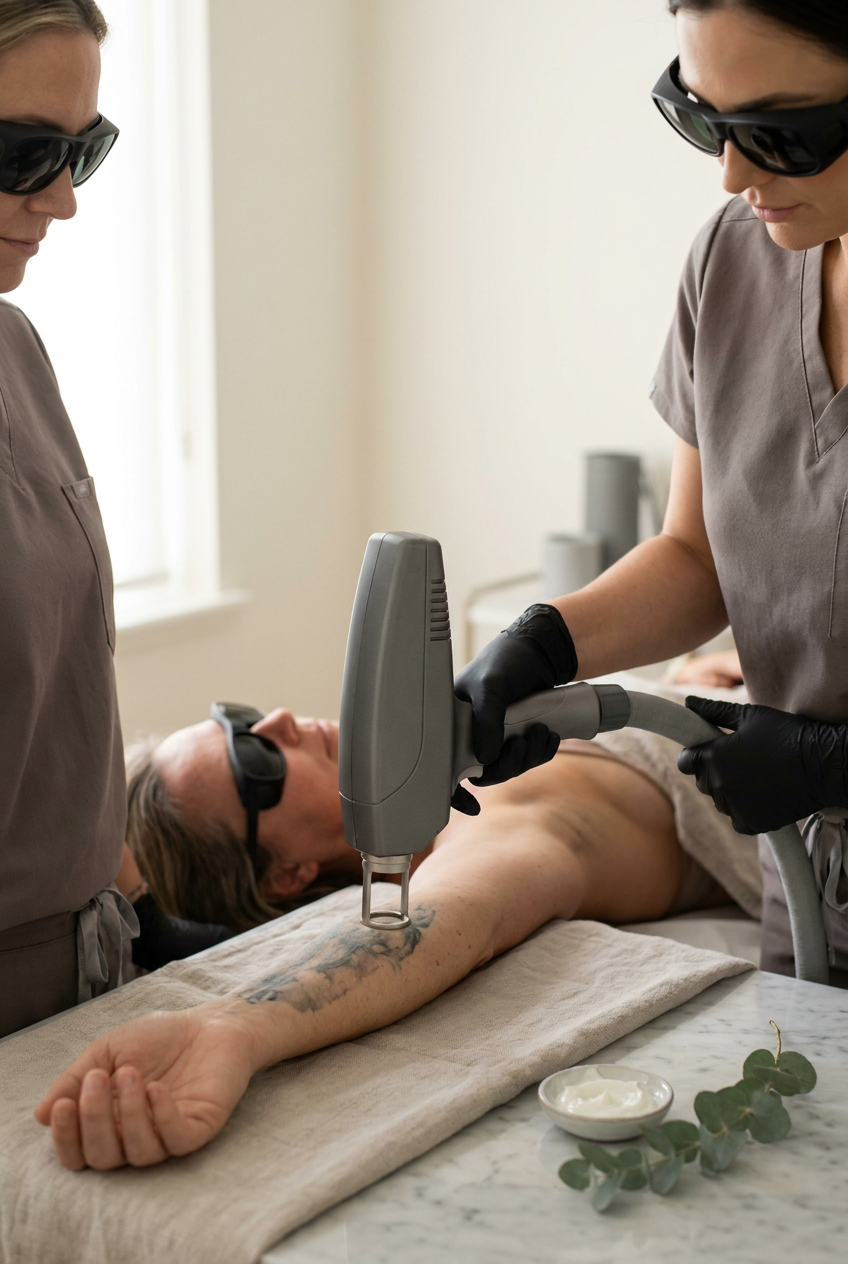
Table of Contents
- Is Laser Tattoo Removal Painful? The Honest Answer
- Factors That Influence Your Pain Experience
- Laser Tattoo Removal Pain Management: Reducing Discomfort
- How Many Sessions for Laser Tattoo Removal and Pain Progression
- Laser Tattoo Removal Aftercare Tips: Managing Post-Session Pain
- Laser Tattoo Removal vs Getting a Tattoo: Comparing the Pain
- Common Misconceptions About Laser Tattoo Removal Pain
- Conclusion: Understanding Your Pain Threshold
Is Laser Tattoo Removal Painful? What to Expect
Last Updated: July 2, 2026
Yes, laser tattoo removal involves discomfort, but it's manageable and varies significantly from person to person. At Vale Laser Aesthetics, we've helped over 5,000 clients through this process. Understanding what to expect makes a tremendous difference in how patients experience their treatment. The sensation is often compared to a rubber band snapping against your skin, though many describe it as more intense. The pain comes in pulses as the laser fires, with brief moments of relief between each pulse. This discomfort is manageable, predictable, and temporary.
What Does Laser Tattoo Removal Feel Like?
When the laser fires, you experience a sharp, stinging sensation lasting only milliseconds. Many patients describe it as similar to being snapped with a rubber band, whilst others say it feels like hot needles. The key difference from a tattoo gun is that laser pulses last only nanoseconds, whereas a tattoo needle creates continuous trauma through repeated punctures.
The experience happens in waves. As the laser targets tattoo ink in the dermis layer, you'll feel distinct pulses rather than continuous pain. Between pulses, there's a moment of relief. This rhythmic pattern makes the experience more psychologically manageable than you might expect. The intensity may build slightly as the session progresses because your skin becomes more sensitive and adrenaline wears off.
You may notice a faint burning odour as the laser heats the pigment and surrounding tissue. This is completely normal. Some clinics use skin cooling systems that reduce this sensation, whilst others rely on topical anaesthetics.
Pain Scale and Individual Tolerance
Pain perception during laser tattoo removal typically falls between 4 and 8 on a standard 10-point pain scale, though this varies dramatically based on individual pain tolerance and specific factors. Most patients report that the pain is manageable, uncomfortable enough to require preparation, but not so severe that it prevents treatment completion.
Your pain tolerance depends partly on genetics and partly on psychological factors. People who've experienced significant pain before often report that laser tattoo removal feels less intense than expected. The duration of treatment matters significantly. A small tattoo might be treated in 30 seconds, whilst a large piece could take 10-15 minutes. By the end of a longer session, your pain perception may increase even if the laser intensity remains constant.
Factors That Influence Your Pain Experience
Understanding what makes laser tattoo removal more or less painful helps you prepare mentally and physically.

Tattoo Location and Skin Sensitivity
Location is perhaps the single most important factor influencing pain levels. Areas with thinner skin and more nerve endings, such as the inner wrist, ankle, spine, and ribcage, are significantly more sensitive than areas with thicker skin and more subcutaneous fat, such as the upper arm, thigh, or calf.
The inner wrist and ankle rank among the most painful locations because the skin is thin with minimal underlying tissue to absorb the laser's energy. Treatments on the upper arm, thigh, or buttocks are typically much less painful because these areas have thicker skin and more fat padding. Any tattoo directly over bone, whether on the shin, collarbone, or knuckles, will feel more intense because bone conducts vibration and heat differently than soft tissue.
Tattoo Characteristics and Ink Type
Black ink absorbs laser energy most efficiently, allowing the laser to use lower power settings. Coloured inks, particularly red, orange, and yellow, require higher laser intensities because they absorb energy less efficiently. Higher laser power directly correlates with increased pain.
Older tattoos are often less painful to remove than fresh ones because the ink has oxidised and become more fragmented, requiring less energy to break apart. Heavily saturated tattoos require more laser pulses and potentially higher power settings than lightly tattooed areas.
Laser Technology and Wavelength
Different laser technologies operate at different wavelengths, affecting both efficacy and comfort. Picosecond lasers deliver energy in trillionths of a second, compared to nanosecond technology's billionths of a second. The shorter pulse duration means less thermal damage to surrounding tissue and potentially less pain. At Vale Laser Aesthetics, our FDA-approved technology is calibrated to balance efficacy with patient comfort, using settings tailored to your specific tattoo characteristics.
Laser Tattoo Removal Pain Management: Reducing Discomfort
Modern pain management techniques make laser tattoo removal significantly more comfortable than it was a decade ago. A combination of topical anaesthetics, cooling systems, and psychological preparation can reduce pain perception by 40-60%.
Topical Anaesthetics and Numbing Cream
Topical anaesthetics, most commonly lidocaine-based products, are the first line of defence. These creams work by blocking nerve signals in the epidermis. The most effective approach involves applying a strong anaesthetic cream 30-45 minutes before your appointment, often under an occlusive dressing that helps the medication penetrate more deeply.
Lidocaine cream typically reduces pain perception by 30-50%, depending on the formulation and application method. The timing matters significantly, applying the cream too early allows it to dry out, whilst applying it too late means insufficient penetration before treatment begins.
Skin Cooling Techniques During Treatment
Skin cooling works through two mechanisms: it reduces nerve conduction velocity and protects the epidermis from thermal damage whilst allowing the laser energy to reach the deeper ink. Modern cooling systems often reduce pain perception by 20-40%.
Common cooling methods include cryogenic cooling (using compressed air), contact cooling (using a chilled sapphire crystal window on the laser handpiece), and topical cooling (applying ice packs between pulses). Many practitioners use a combination approach: numbing cream before treatment, contact cooling during laser pulses, and topical cooling between pulses.
Psychological Preparation Strategies
Your mental state significantly influences pain perception. Patients who understand what to expect, feel in control, and have coping strategies experience less pain than those who are anxious or unprepared.
Before your appointment, familiarise yourself with the sensation by reading patient accounts and discussing the experience with your practitioner. Knowing that pain comes in distinct pulses rather than continuous sensation helps your brain prepare. During treatment, controlled breathing significantly reduces pain perception. Many practitioners recommend breathing in deeply before each laser pulse and exhaling slowly during it.
Distraction techniques also work remarkably well. Listening to music, watching a video, or engaging in conversation redirects your attention away from the sensation. The combination of understanding what to expect, controlling your breathing, and maintaining psychological focus creates a powerful pain-management toolkit.
How Many Sessions for Laser Tattoo Removal and Pain Progression
Most tattoos require 6-12 sessions for complete removal, though this varies based on tattoo age, size, colours, and ink depth. Typically, sessions are spaced 6-8 weeks apart, allowing your immune system time to clear fragmented ink particles and your skin to fully recover.
The first session is often the most psychologically challenging because you don't know what to expect. Pain perception during the first session is typically 5-7 on a 10-point scale for most people. Many patients report that the second and third sessions feel slightly more painful than the first, even though remaining ink is less dense, partly because the novelty has worn off. By sessions 4-6, pain perception often decreases as the tattoo becomes visibly lighter and patients feel motivated by progress.
The final sessions are typically less painful than earlier ones because there's simply less ink remaining to target. By session 10 or 11, many patients report that pain is minimal, perhaps 2-3 on the 10-point scale.
Laser Tattoo Removal Aftercare Tips: Managing Post-Session Pain
Proper aftercare directly influences both comfort and results. Immediately after treatment, your skin will feel warm and may appear red or slightly swollen, this is normal and typically subsides within 1-2 hours. Many patients describe post-session discomfort as a sunburn-like sensation. This usually peaks within the first 2-4 hours and gradually decreases over 24-48 hours.
Ice packs applied for 10-15 minutes immediately after treatment significantly reduce inflammation and associated discomfort. Avoid excessive icing, as more than 20 minutes at a time can damage skin. Over-the-counter pain relievers like paracetamol or ibuprofen can help manage post-session discomfort, though most patients find they're unnecessary if ice packs are used effectively.
Loose, soft clothing over the treated area reduces irritation from friction. Avoid hot baths, saunas, and strenuous exercise for at least 48 hours, as heat and sweating can increase inflammation and discomfort.
Blistering occurs in roughly 10-20% of treatments, particularly on sensitive skin or when treating densely inked areas. If blistering develops, resist the urge to pop the blister. The fluid inside provides a protective barrier and promotes healing. Keep the area clean and dry, apply antibiotic ointment if recommended, and cover with a sterile bandage if needed.
Infection risk is minimal if you follow aftercare instructions. Signs to watch for include increasing redness, warmth, pus, or spreading inflammation beyond the treated area. If you notice these symptoms, contact your practitioner immediately.
Laser Tattoo Removal vs Getting a Tattoo: Comparing the Pain
Getting a tattoo involves continuous, repetitive needle punctures, typically 50-3,000 per minute. This creates a sustained, grinding sensation that many describe as annoying rather than acutely painful. Tattoo pain typically ranks 4-6 on the pain scale for most people.
Laser tattoo removal involves brief, distinct pulses of energy rather than continuous trauma. Each pulse lasts only nanoseconds, creating a sharp sensation rather than a grinding one. Many people find the pulsed sensation easier to tolerate psychologically than the sustained sensation of tattooing, even if the peak intensity of each pulse is slightly higher. The breaks between pulses allow your nervous system to reset.
One advantage of laser removal is that you can stop the process. If pain becomes unbearable, your practitioner can pause, apply additional numbing cream or cooling, and resume. This sense of control significantly influences pain perception and makes laser removal feel more manageable for many people.
Common Misconceptions About Laser Tattoo Removal Pain
Misconception 1: "It's painless with numbing cream." Reality: Numbing cream significantly reduces pain but doesn't eliminate it. You'll still feel distinct pulses, though the sensation is muted.
Misconception 2: "It gets progressively more painful with each session." Reality: Pain often decreases across sessions as the tattoo fades and lower laser power becomes effective.
Misconception 3: "Larger tattoos are proportionally more painful." Reality: Pain is more influenced by location and ink density than by size.
Misconception 4: "You need to be completely pain-free to proceed." Reality: Manageable discomfort is normal and expected.
Misconception 5: "Cheaper clinics hurt less because they use gentler settings." Reality: Gentler settings are actually less effective and may require more sessions.
Understanding whether laser tattoo removal is painful requires moving beyond simple yes-or-no answers. The experience is real, manageable, and highly variable. What matters most is preparation: understanding what to expect, using effective pain management strategies, and working with qualified practitioners who prioritise your comfort.
If you're considering tattoo removal in the Pontyclun area or across South Wales, Vale Laser Aesthetics offers comprehensive consultations where we discuss your specific tattoo, assess your pain tolerance, and develop a personalised treatment plan. Our fully qualified, HIW-approved practitioners use FDA-approved technology and proven pain management protocols. We've successfully treated over 5,000 clients, and our 230+ five-star reviews reflect our commitment to both results and patient comfort. Book your free, no-obligation consultation today.
Frequently Asked Questions
What does laser tattoo removal feel like?
Most people describe laser tattoo removal as similar to a rubber band snapping against the skin repeatedly. Each laser pulse creates a brief, sharp sensation as the light energy targets the tattoo ink in the dermis. The discomfort typically lasts only seconds per pulse, though the overall session duration varies depending on tattoo size. Numbing cream and skin cooling can significantly reduce this sensation.
How can I reduce pain during laser tattoo removal?
Several strategies minimise discomfort. Topical anaesthetics containing lidocaine applied 30 minutes before treatment numb the area effectively. Skin cooling devices used during the procedure reduce sensation by lowering dermis temperature. Psychological preparation, breathing techniques and mental distraction, also helps manage pain perception. Discuss these options with your dermatologist before your session.
Does pain increase after laser tattoo removal sessions, and how long does it last?
Post-session discomfort typically peaks within 24 hours and subsides within 2-3 days. The treated area may feel tender, similar to a sunburn. Ice packs and over-the-counter pain relief help manage this. Subsequent sessions may feel slightly less painful as remaining ink pigment decreases, requiring fewer laser pulses. However, individual pain thresholds vary significantly.
Is laser tattoo removal more painful than getting a tattoo?
Laser tattoo removal is generally considered less painful than the original tattooing process. Whilst getting tattooed involves continuous needle punctures over longer periods, laser removal delivers brief pulses with intervals between them. However, pain perception differs individually. Some people find the quick, intense pulses of laser treatment more uncomfortable than the sustained sensation of tattooing, whilst others experience the opposite.