ultimate-guide
Is Laser Hair Removal Safe for Face? A 2026 Guide
Mandy Davis · 22 June 2026 · 15 min read
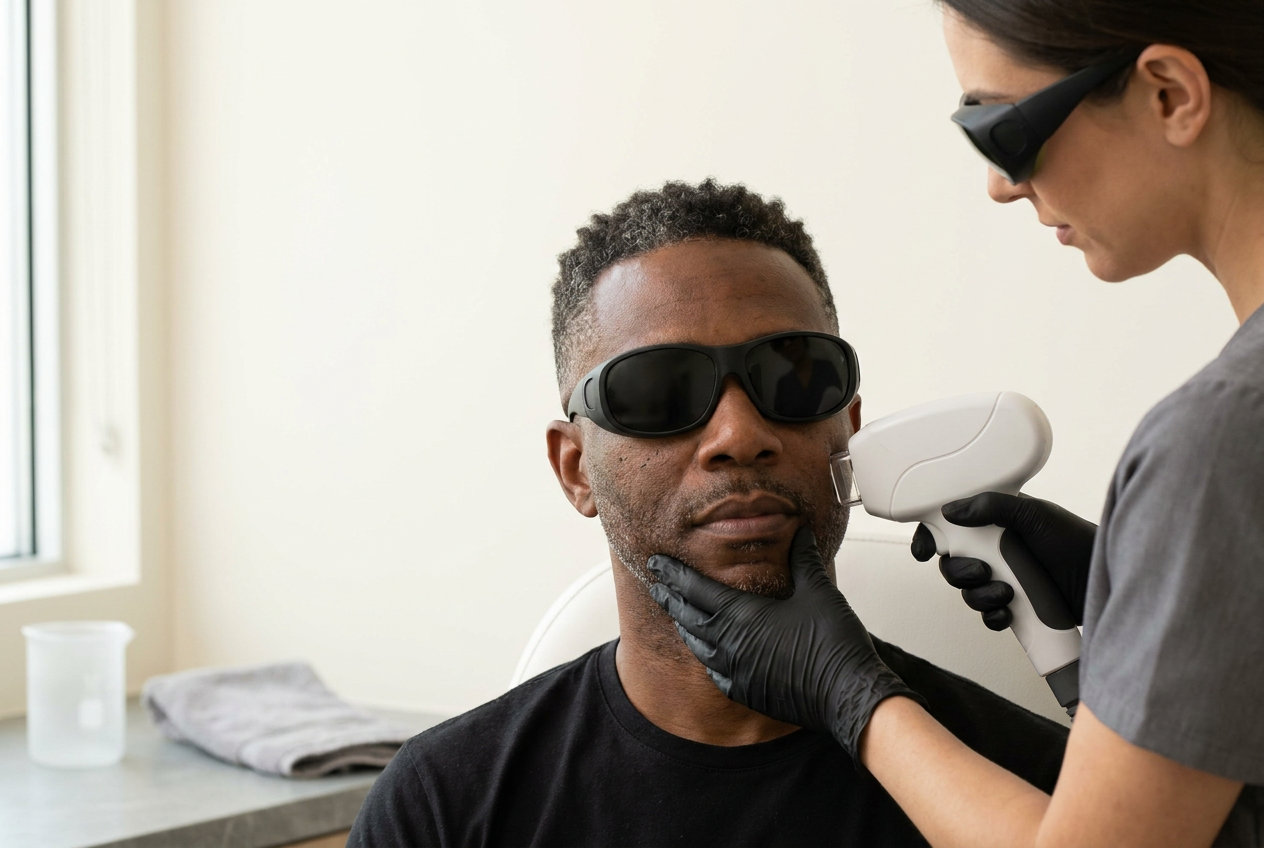
Table of Contents
- Is Laser Hair Removal Safe for the Face?
- Who Is a Good Candidate for Facial Laser Hair Removal?
- Treatment Areas on the Face: Safe Zones Explained
- Laser Hair Removal Side Effects on the Face
- Laser Hair Removal vs Waxing for the Face
- How to Prepare Your Face Before a Laser Session
- Laser Hair Removal Aftercare for the Face
- Facial Laser Hair Removal Recovery Time: What to Expect
Last Updated: June 17, 2026
So many people ask whether is laser hair removal safe for face treatments before booking their first appointment, and the honest answer is: yes, when performed by qualified practitioners using the right technology for your skin type. At Vale Laser Aesthetics, we see this question every week at our Pontyclun clinics. Below, we'll walk you through exactly how facial laser hair removal works, who it suits, what the real risks are, and how to protect your skin before and after treatment.
Safety is a spectrum, not a binary yes or no. It depends on three variables: the laser technology used, the practitioner's training, and how well your skin type is matched to the treatment protocol.

Is Laser Hair Removal Safe for the Face?
Laser hair removal is a noninvasive clinical procedure that uses concentrated light energy to disable hair follicles at the root, producing permanent reduction in facial hair over a course of sessions. According to the British Association of Dermatologists guidance on laser treatments, it is considered safe for most adults when carried out by trained professionals using appropriate equipment.
The face presents specific challenges: skin is thinner, more reactive, and sits directly over bone. The upper lip, chin, and jaw line each require precise energy calibration to avoid burns, scarring, or discoloration. Modern systems can differentiate between melanin in the hair follicle and melanin in surrounding skin far more precisely than earlier devices, which is why adverse events have become less common.
The bottom line: yes, for the vast majority of candidates, provided the clinic uses medical-grade equipment and practitioners who understand facial anatomy.
How the Laser Targets Hair Follicles
The laser targets melanin, the pigment that gives hair its colour. When absorbed by the follicle, light converts to heat and damages the follicle's ability to produce new hair without affecting surrounding tissue. This process, selective photothermolysis, tunes the laser to a wavelength melanin absorbs efficiently while surrounding skin reflects the energy harmlessly.
Facial hair follicles tend to be finer and lighter than on the legs or underarms. Lighter hair contains less melanin and absorbs less laser energy, which is why facial treatments sometimes require more sessions than body treatments.
Which Laser Types Are Used on Facial Skin?
The choice of laser type is arguably the single biggest factor in both safety and efficacy for facial treatments. The three most commonly used systems are:
- Alexandrite (755nm): Fast and effective on lighter skin tones (Fitzpatrick I-III). The shorter wavelength carries a higher risk of hyperpigmentation on darker skin.
- Nd:YAG (1064nm): The longest wavelength in common use, bypassing epidermal melanin more safely. The preferred choice for darker skin tones (Fitzpatrick IV-VI) and tanned skin.
- Diode (800-810nm): A versatile mid-range option that works across a broader range of skin tones, balancing speed, depth, and safety.
The Fitzpatrick scale classifies skin types from Type I (very fair, always burns) to Type VI (deeply pigmented, never burns). Matching the correct laser wavelength to your Fitzpatrick classification is non-negotiable for safe facial treatment. Clinics using a single laser system for all clients should prompt questions about whether that system suits your skin tone.
Vale Laser Aesthetics uses medical-grade technology across its three South Wales clinics, with protocols tailored to individual skin type assessments at consultation.
Who Is a Good Candidate for Facial Laser Hair Removal?
Most adults with unwanted facial hair are candidates, but suitability requires more nuance than a simple yes or no. A thorough consultation with a qualified healthcare professional is the correct starting point.
Skin Tone, the Fitzpatrick Scale, and Melanin Considerations
The laser needs a meaningful contrast in melanin concentration between the hair follicle and surrounding skin. On fair skin with dark hair, that contrast is high and treatment is straightforward. On darker skin tones, where both hair and skin contain significant melanin, the risk of the laser affecting the epidermis increases, but this is a calibration challenge, not a barrier. With the correct laser (typically Nd:YAG) and an experienced practitioner, darker-skinned individuals achieve excellent results safely.
As documented in NHS guidance on laser and intense pulsed light hair removal, people with darker skin tones should specifically seek practitioners experienced with their skin type and ask about the specific laser technology being used.
Hormonal vs. Non-Hormonal Facial Hair Growth
Non-hormonal facial hair, fine upper lip or chin hair present since puberty without change, responds well to laser treatment, with durable long-lasting results once active follicles are disabled.
Hormonal facial hair is different. Conditions such as polycystic ovary syndrome (PCOS), thyroid disorders, or menopausal hormonal shifts can continuously stimulate dormant follicles, causing new hair to grow even after successful treatment. Laser hair removal will still reduce existing hair effectively; it simply will not prevent hormonally triggered new growth. Managing the underlying hormonal condition alongside treatment produces the best long-term results.
Treatment Areas on the Face: Safe Zones Explained
Safe treatment zones include:
- Upper lip (one of the most popular facial treatment areas)
- Chin and jaw line
- Cheeks and sideburns
- Forehead and hairline shaping
- Neck and throat
The area requiring extra caution is directly below the brow bone and around the eye socket. Laser energy near the eyes risks ocular damage. Reputable clinics always provide protective eyewear and will not treat the eyelids or immediately adjacent areas.
The upper lip is both the most requested facial treatment area and the most sensitive. The skin is thin, close to mucous membranes, and clients often find it more uncomfortable than other facial zones. Experienced practitioners adjust their technique accordingly.
Laser Hair Removal Side Effects on the Face
Common Side Effects: Redness, Swelling, and Pigment Changes
The most common side effects are temporary and resolve within hours to a few days. Redness and swelling immediately after treatment are essentially universal, a sign the follicles have absorbed energy. Expect the treated area to feel similar to mild sunburn for 24-48 hours. Slight pigment changes can occur and typically resolve within two to four weeks, and are more common in people with darker skin tones or recent sun exposure.
Rare but Serious Risks: Burns, Scarring, and Hyperpigmentation
Serious complications are rare when treatment is performed correctly. When they occur, they are almost always the result of incorrect laser settings, inadequate skin type assessment, or treatment of recently tanned skin. Burns and scarring are most likely when:
- The wrong laser type is used for the client's skin tone
- Energy settings are too high for the treatment area
- The client has active sun exposure or a recent tan
- Certain photosensitising skincare ingredients are present on the skin
Persistent hyperpigmentation is more common in Fitzpatrick IV-VI skin types treated with inappropriate laser systems and can take months to fade. The risk mitigation is straightforward: choose a clinic with HIW-approved practitioners, verify the technology being used, and disclose your full skincare routine and sun exposure history at consultation.
Laser Hair Removal vs Waxing for the Face
The comparison between laser hair removal vs waxing for face treatments comes down to a simple trade-off: short-term convenience versus long-term results.
| Factor | Laser Hair Removal | Waxing |
|---|---|---|
| Duration of results | Permanent reduction | 3-6 weeks |
| Pain level | Mild to moderate | Moderate to high |
| Skin irritation risk | Low (after healing) | Moderate (ingrown hairs) |
| Suitable for sensitive skin | Yes, with correct laser | Often problematic |
| Long-term cost | Lower over time | Ongoing recurring cost |
| Sessions required | 6-10 initially | Every 3-6 weeks indefinitely |
Waxing removes hair temporarily but leaves the follicle intact. It also carries its own facial risks: folliculitis, ingrown hairs, and post-inflammatory hyperpigmentation from repeated pulling are common, particularly on the upper lip and chin. After a full course of laser treatment, most clients see a permanent reduction of 70-90% in hair density, with remaining hair typically finer and lighter. The ongoing cost of waxing over years often exceeds the upfront investment in laser treatment.
How to Prepare Your Face Before a Laser Session
Preparation directly affects both safety and effectiveness. The standard protocol:
- Shave the treatment area 24-48 hours before your session, the hair root must remain in the follicle for the laser to target it.
- Avoid sun exposure for at least two weeks before treatment. Tanned skin has elevated epidermal melanin, increasing the risk of the laser targeting skin rather than follicle.
- Stop self-tanning products at least two weeks prior.
- Avoid waxing, threading, or epilating for four to six weeks before treatment, these remove the hair root, leaving nothing for the laser to target.
- Attend your consultation and disclose all medications, particularly any that cause photosensitivity.
Skincare Routine Compatibility: What to Pause and What to Keep
Pause before treatment:
- Retinoids (retinol, tretinoin): stop 5-7 days before treatment
- AHAs and BHAs (glycolic acid, salicylic acid): thin the skin barrier and increase photosensitivity
- Vitamin C serums in high concentrations: can sensitise skin to light energy
- Benzoyl peroxide: photosensitising and can react unpredictably with laser energy
Safe to continue:
- Gentle cleansers and fragrance-free moisturisers
- SPF (essential, but avoid on the day of treatment itself)
- Hyaluronic acid-based hydration
According to American Academy of Dermatology guidance on laser preparation, disclosing your full skincare routine at consultation is essential because some ingredients interact directly with laser energy and can cause unexpected skin reactions.
Laser Hair Removal Aftercare for the Face
Aftercare is straightforward but non-negotiable. The 48 hours following treatment are when skin is most vulnerable.
Immediate aftercare steps:
- Apply a cool compress or chilled gel pack to reduce redness and swelling
- Use a gentle, fragrance-free moisturiser to support the skin barrier
- Avoid touching or rubbing the treated area
- Keep the face out of direct sunlight and apply SPF 30 or higher if going outdoors
- Avoid heat: saunas, steam rooms, and very hot showers for 24-48 hours
- Do not apply makeup for at least 24 hours, ideally 48 hours on sensitive skin

Avoid in the week following treatment: retinoids and exfoliating acids (wait at least 5-7 days), waxing or threading, picking any crusting or textural changes, and intense exercise causing heavy sweating for 24-48 hours. Hair shedding in the two to three weeks following treatment is normal, it is the treated hair being expelled from the follicle, not regrowth.
Facial Laser Hair Removal Recovery Time: What to Expect
Recovery is shorter than most people anticipate. A realistic timeline:
- 0-4 hours post-treatment: Redness, warmth, and mild swelling similar to sunburn.
- 24-48 hours: Most redness resolves; skin may feel slightly sensitive.
- 1-2 weeks: Hair in treated follicles begins to shed, this looks temporarily like regrowth but is the opposite.
- 2-4 weeks: Full skin recovery; pigment changes begin to normalise.
- 6-8 weeks: Next treatment session (most facial protocols space sessions 4-8 weeks apart to align with the hair growth cycle).
Most clients need between six and ten sessions for significant permanent reduction, with some requiring periodic maintenance thereafter. The first session often produces the most dramatic immediate reaction; subsequent sessions typically cause milder responses as hair density reduces.
For anyone searching for laser hair removal near me in the Pontyclun and South Wales area, the most important factor is not proximity but practitioner qualification and technology quality. A longer drive to a properly equipped, HIW-approved clinic is always worth it.
Unwanted facial hair affects confidence in a way that is genuinely difficult to manage with temporary methods alone. Vale Laser Aesthetics offers facial laser hair removal across three South Wales clinics, delivered by fully qualified, HIW-approved practitioners using medical-grade technology. With over 20,000 treatments carried out and 230+ five-star reviews, the team brings both clinical precision and genuine care to every consultation. Book a free, no-obligation consultation with Vale Laser Aesthetics and take the first step towards lasting results.
Frequently Asked Questions
What are the side effects of laser hair removal on the face?
The most common laser hair removal side effects on the face include temporary redness, swelling, and mild sensitivity in the treated area, which typically resolve within a few hours to a couple of days. Less commonly, some people may experience skin discoloration or hyperpigmentation, particularly if aftercare guidance is not followed. Serious complications such as burns or scarring are rare when the clinical procedure is carried out by a fully qualified healthcare professional using appropriate technology.
Is laser hair removal safe for sensitive facial skin?
Laser hair removal is generally considered safe for sensitive facial skin when performed by a qualified dermatologist or trained practitioner. A thorough consultation is essential to assess your skin tone using the Fitzpatrick scale and select the most suitable laser type. Those with sensitive skin may experience slightly more redness or swelling after treatment, but these side effects are usually short-lived. Patch tests and personalised treatment settings help minimise the risk of irritation.
Can laser hair removal cause hyperpigmentation on the face?
Yes, hyperpigmentation is a possible side effect of facial laser hair removal, particularly in individuals with deeper skin tones where melanin levels are higher. The laser beam targets pigment in hair follicles, but if settings are not properly calibrated, surrounding skin tissue can absorb excess light and cause temporary skin discoloration. Choosing a clinic with experienced, qualified practitioners and medical-grade technology significantly reduces this risk. Following aftercare instructions, including sun avoidance, is also critical.
How many sessions of laser hair removal are needed for the face?
Most people require between six and eight sessions for effective permanent reduction of facial hair, though this varies depending on hair colour, skin tone, the specific treatment area, and whether hair growth is linked to a hormonal imbalance. Areas such as the upper lip and chin may respond differently to each other. Sessions are typically spaced four to six weeks apart to target follicles during their active growth phase. A personalised consultation will give you a more accurate estimate.
How should I prepare my face for laser hair removal?
In the weeks before your session, avoid waxing, plucking, or any hair removal method that disturbs the hair follicle, as the laser needs the root intact to be effective. Shaving is the recommended method in the days leading up to treatment. Pause active skincare ingredients such as retinoids and AHAs for at least a week beforehand, and avoid sun exposure or tanning. Always attend a consultation first so your practitioner can review your full skincare routine and medical history.
Does laser hair removal on the face cause hair to grow back thicker?
No, this is a common myth. Laser hair removal works by damaging hair follicles to inhibit future growth, resulting in permanent reduction over time, not thicker regrowth. Any hair that does return after treatment tends to be finer and lighter than before. In some cases, particularly where medically excessive hair is linked to a hormonal imbalance, maintenance sessions may be needed, but the treatment itself does not stimulate or thicken hair growth.