ultimate-guide
Benefits of Medical Grade Laser Technology: A 2026 Guide
Mandy Davis · 14 July 2026 · 13 min read
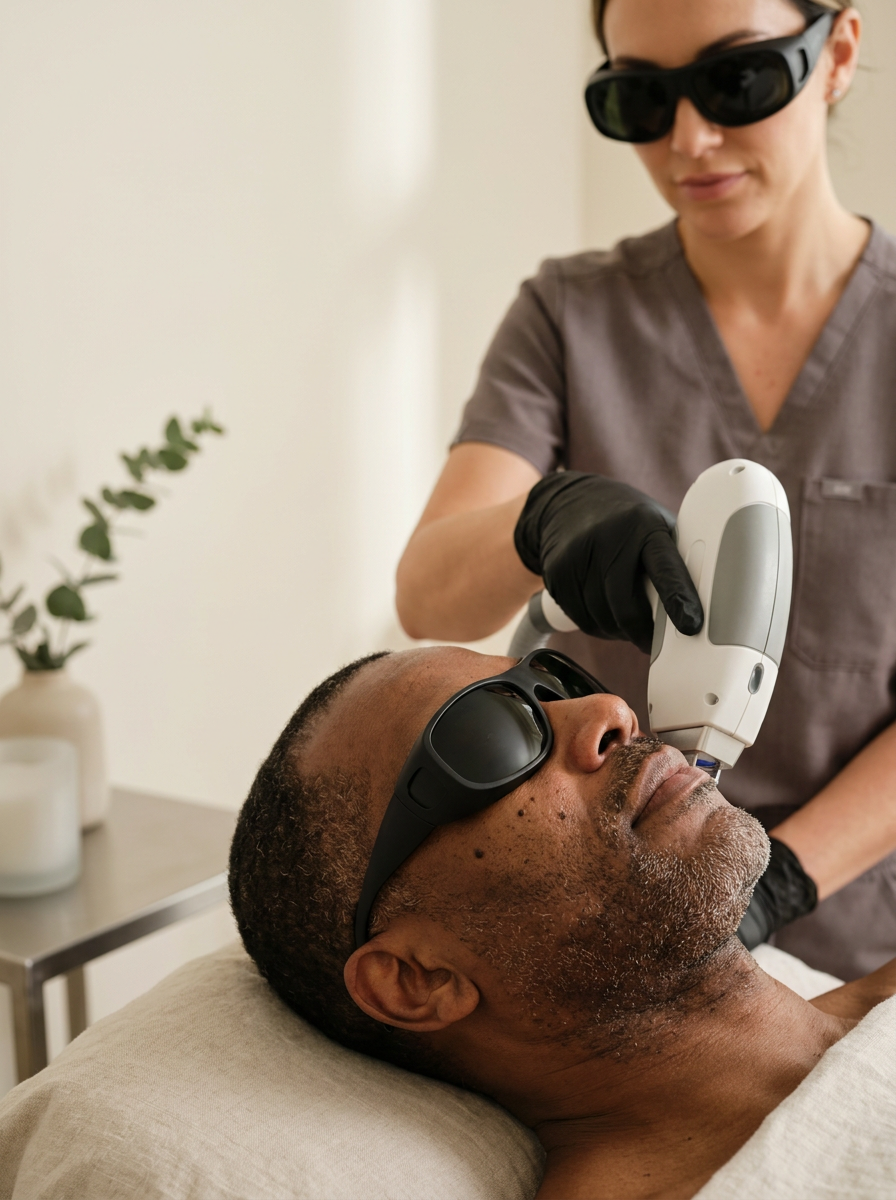
Table of Contents
- What Is Medical Grade Laser Technology?
- Medical Grade Laser vs At-Home Laser: Key Differences
- Surgical Precision and Control: Core Benefits of Medical Grade Laser Technology
- Reduced Recovery Time and Accelerated Healing
- Pain Management and Inflammation Reduction
- Benefits of Laser Skin Resurfacing for Dermatological Applications
- Safety, Patient Outcomes, and Clinical Evidence
- Patient Preparation and Post-Procedure Care
Benefits of Medical Grade Laser Technology: A 2026 Guide
Last Updated: June 2026
Medical grade laser technology has fundamentally transformed surgical precision, skin rejuvenation, and therapeutic treatment. Understanding what sets these systems apart from consumer devices is essential for anyone considering advanced aesthetic or clinical procedures. At Vale Laser Aesthetics, we've carried out over 20,000 treatments across our South Wales clinics. This guide explains what makes medical grade lasers the gold standard for permanent results, reduced recovery times, and measurable clinical outcomes.
What Is Medical Grade Laser Technology?
Medical grade laser systems emit concentrated light energy at specific wavelengths to target tissue at the cellular level. Unlike at-home devices operating at lower power outputs, medical grade lasers deliver therapeutic energy sufficient to create lasting biological change. These systems are FDA-cleared and require trained practitioners to operate safely.
The technology works through photobiomodulation, the interaction between light energy and living tissue. When laser light penetrates skin at the correct wavelength and power density, it stimulates cellular activity without causing thermal damage. Different wavelengths penetrate to different depths: infrared wavelengths reach deeper tissue structures, whilst visible wavelengths target superficial layers.
How Medical Lasers Differ from At-Home Devices
Medical grade systems deliver 12-20 joules per square centimetre, whilst at-home devices typically max out at 3-5 joules per square centimetre. This difference translates directly to efficacy: medical systems achieve permanent hair reduction in 6-8 sessions, whilst at-home devices require 12-24 sessions with less reliable results.
Medical grade systems include cooling mechanisms, real-time power monitoring, and adjustable parameters that customise treatment for individual skin types. A qualified practitioner can assess your skin in real time, adjust wavelength and pulse duration mid-treatment, and ensure safety throughout. Medical grade lasers pass rigorous FDA clearance and comply with international safety standards, whilst at-home devices face far fewer restrictions.
Medical Grade Laser vs At-Home Laser: Key Differences
Medical grade systems incorporate multiple safety features at-home devices cannot replicate. Integrated cooling systems protect skin during treatment, reducing discomfort and post-procedure inflammation. Real-time feedback mechanisms monitor skin temperature and energy delivery, automatically adjusting if conditions change.
A medical grade laser hair removal system costs £50,000-£150,000 to purchase and maintain, ensuring consistent, reliable results backed by clinical evidence. At-home devices cost £200-£1,000 and typically deliver inconsistent outcomes. The cost per treatment, calculated across the full course needed for permanent results, often favours professional systems.
Treatment customisation represents another critical distinction. Medical practitioners adjust wavelength, pulse duration, frequency, and spot size based on individual skin type, hair colour, and concern severity. For someone with darker skin tone seeking hair removal, this flexibility is essential; medical grade systems can be calibrated safely, whilst many at-home devices carry genuine risk of burns or pigmentation changes.
| Aspect | Medical Grade | At-Home Device |
|---|---|---|
| Power Output | 12-20 J/cm² | 3-5 J/cm² |
| Treatment Sessions Needed | 6-8 | 12-24+ |
| Cooling System | Integrated, automatic | Minimal or none |
| Customisation Options | Extensive (wavelength, pulse, frequency) | Limited presets |
| FDA Clearance | Yes, full regulatory approval | Minimal oversight |
| Practitioner Training | Extensive certification required | Consumer instruction only |
| Safety Monitoring | Real-time feedback systems | Manual user control |
| Cost per Full Course | Confirmed at a free consultation | Varies by device |
Surgical Precision and Control: Core Benefits of Medical Grade Laser Technology
Surgical precision defines professional laser treatment. Medical grade systems deliver energy to exact tissue depths with micrometre-level accuracy, enabling delicate procedures near the eyes, lips, and sensitive areas. This precision stems from the laser's coherent light beam; all photons travel in the same direction at the same wavelength, creating a focused spot size as small as 1-2 millimetres.

When treating broken capillaries, a practitioner can target individual blood vessels without damaging surrounding tissue. When resurfacing acne scars, the laser ablates damaged collagen layer by layer, allowing controlled tissue regeneration. Wavelength specificity enhances precision further: a 532-nanometre laser targets haemoglobin in blood vessels, ideal for vascular lesions, whilst a 1064-nanometre laser penetrates deeper and targets melanin, better for hair removal across multiple skin tones.
Real-time feedback systems add another layer of control. Modern medical grade lasers monitor skin temperature and reflectance during treatment, automatically adjusting power if conditions change. This closed-loop control prevents overtreatment and reduces adverse outcomes.
Reduced Recovery Time and Accelerated Healing
One of the most compelling benefits of medical grade laser technology is dramatically shortened recovery time compared to invasive surgery. A traditional surgical facelift requires 2-3 weeks of significant downtime. Medical grade laser resurfacing achieves comparable skin tightening and rejuvenation with 3-7 days of noticeable downtime and full recovery in 2-4 weeks.
This acceleration happens because medical lasers stimulate the body's natural healing response without creating massive tissue trauma. When laser energy ablates damaged skin layers, it triggers immediate collagen remodelling and tissue regeneration.
Medical Grade Laser Recovery Time Expectations
Recovery timelines vary by laser type and treatment intensity. Non-ablative lasers typically involve minimal downtime; redness fades within hours to 24 hours. Ablative lasers require more recovery time but deliver more dramatic results.
For ablative CO₂ laser resurfacing, expect 7-10 days of visible redness and peeling, with full skin barrier restoration in 2-3 weeks. Fractional laser treatments require 3-5 days recovery with results building progressively across multiple sessions.
Pain Management and Inflammation Reduction
Medical grade lasers excel at reducing pain and inflammation. For chronic pain conditions, low-level laser therapy at specific wavelengths triggers photobiomodulation, reducing inflammation at the cellular level. Wavelengths between 600-1000 nanometres penetrate tissue effectively and stimulate mitochondrial activity, increasing ATP production and reducing inflammatory cytokines.
During procedures, integrated cooling systems manage discomfort remarkably well. Most clients describe the sensation as a warm snapping feeling rather than pain. Topical anaesthetics applied before treatment further reduce sensation, and dynamic cooling delivers cool air milliseconds before the laser pulse.
For inflammatory skin conditions like acne, medical grade laser treatment addresses the root cause. Certain wavelengths target the bacteria responsible for acne whilst simultaneously reducing sebaceous gland activity. Many clients see significant improvement in 4-6 treatments, with lasting benefits extending months beyond the final session.
Benefits of Laser Skin Resurfacing for Dermatological Applications
Laser skin resurfacing has become the gold standard for addressing multiple dermatological concerns simultaneously. A single treatment can improve skin texture, reduce fine lines, fade age spots, minimise pore size, and stimulate collagen production.
The versatility stems from the laser's ability to selectively target different tissue structures based on wavelength. Superficial concerns like age spots respond to wavelengths targeting melanin in the epidermis. Deeper concerns like fine lines respond to wavelengths penetrating to the dermis and stimulating collagen production.
Acne scar improvement represents one of the most dramatic applications. Atrophic scars result from collagen loss in the dermis. Laser resurfacing ablates raised tissue around the scar and stimulates new collagen production in the depressed area, gradually filling the scar. Over 3-6 treatments, scars that appeared permanent become barely noticeable.
Collagen Production and Tissue Regeneration
The most profound benefit of medical grade laser resurfacing is stimulated collagen production, genuine tissue regeneration rather than temporary improvement. Controlled thermal injury triggers the wound-healing cascade. Fibroblasts recognise the laser-induced injury as a signal to produce new collagen.
This regeneration is genuine and measurable. Biopsies show increased collagen density, improved collagen organisation, and increased elastin production. Initial results appear within 2-4 weeks as swelling resolves. However, the most dramatic improvements emerge at 3-6 months as collagen remodelling peaks.
Safety, Patient Outcomes, and Clinical Evidence
Medical grade laser systems have an exceptional safety record when operated by trained practitioners. The FDA clearance process requires manufacturers to demonstrate both safety and efficacy through clinical trials. Serious complications are rare, occurring in less than 1% of cases, usually in clients who didn't follow post-procedure care instructions.
The most common side effects are temporary and predictable: redness lasting hours to days, mild swelling for 24-48 hours, and temporary pigmentation changes. Safety outcomes improve dramatically with practitioner qualification. A qualified practitioner knows which wavelengths suit different skin tones, which conditions contraindicate laser treatment, and how to manage complications.
Patient selection also drives safety. Certain conditions contraindicate laser treatment: active infections, severe photosensitivity, certain medications, and recent sun exposure all increase complication risk. A thorough consultation before treatment identifies these risks and either modifies the treatment plan or defers treatment.
Clinical evidence supports the efficacy and safety of medical grade lasers across multiple applications. Studies consistently show hair reduction rates of 80-90% after 6-8 treatments. For skin resurfacing, clinical trials document measurable improvements in skin texture, fine lines, and pigmentation. For vascular lesions, clearance rates exceed 90%.
Patient Preparation and Post-Procedure Care
Success with medical grade laser treatment begins before the appointment. Two weeks before treatment, clients should avoid sun exposure and tanning beds; tanned skin contains excess melanin, which can absorb laser energy and cause burns. Sunscreen (SPF 30+) should be applied daily.
Certain medications increase photosensitivity and should be discussed with the practitioner. Isotretinoin (Accutane) requires clients to wait 6-12 months after finishing before undergoing laser treatment. NSAIDs like ibuprofen should be avoided for 48 hours before treatment.
Post-procedure care determines both comfort and results. Cool compresses reduce discomfort and swelling immediately after treatment. Gentle cleansing with lukewarm water and mild cleanser is appropriate. Moisturiser should be applied whilst skin is slightly damp.
Sun protection becomes absolutely critical post-treatment. Broad-spectrum SPF 30+ should be applied every 2 hours for at least 4 weeks after treatment. Physical sunscreens (zinc oxide or titanium dioxide) are preferable to chemical sunscreens, which can irritate freshly treated skin.
Activities should be modified based on treatment intensity. After non-ablative laser treatment, normal activities can usually resume immediately. After ablative laser treatment, strenuous exercise, swimming, and activities causing sweating should be avoided for 7-10 days.
Skincare products during healing should be minimal and gentle. Harsh actives like vitamin C and acids should be avoided until the skin is fully healed (2-4 weeks). Gentle moisturisers and hydrating serums are appropriate.
| Recovery Phase | Timeline | Care Focus | Restrictions |
|---|---|---|---|
| Immediate (0-24 hours) | First day | Cooling, gentle cleansing, moisturising | No makeup, no strenuous activity |
| Early (1-7 days) | First week | Sun protection, gentle products, hydration | No swimming, no heavy exercise, minimal makeup |
| Mid (1-4 weeks) | Weeks 2-4 | Continued sun protection, gentle skincare | No harsh actives, no direct sun, physical activity OK |
| Late (1-3 months) | Weeks 4-12 | Maintenance, normal skincare resumption | Normal sun protection, normal activities |
Follow-up appointments monitor healing and assess results. Many practitioners schedule a check-in at 1-2 weeks to ensure proper healing. Results continue improving for 3-6 months as collagen remodelling completes.
Professional laser treatment represents a genuine investment in lasting results. The benefits of medical grade laser technology, surgical precision, reduced recovery time, proven safety, and measurable outcomes, justify the cost for anyone seeking permanent or long-lasting improvement. Vale Laser Aesthetics brings these benefits within reach across Pontyclun and the wider South Wales region, with fully qualified practitioners, medical-grade equipment, and a track record of carrying out over 20,000 treatments. Book your free, no-obligation consultation today and discover how medical grade laser technology can transform your skin and confidence.
Frequently Asked Questions
What is the difference between medical grade lasers and cosmetic lasers?
Medical grade lasers are medical-grade devices operated by fully qualified practitioners in clinical settings, delivering higher wavelength precision and power than cosmetic lasers. They penetrate deeper into skin layers for more significant results on conditions like acne scars, broken capillaries, and tattoo removal. Cosmetic lasers, including at-home devices, offer lighter treatments suitable for maintenance but lack the surgical precision and clinical outcomes of medical grade technology.
How does medical grade laser recovery time compare to traditional procedures?
Medical grade laser treatments typically require shorter recovery periods than invasive surgical procedures. Most patients experience minimal downtime, with superficial injuries healing within days rather than weeks. Recovery time varies by treatment type, laser skin resurfacing may require 5-7 days for initial healing, whilst hair removal shows results progressively over several sessions with no downtime between treatments. This minimally invasive approach allows patients to resume normal activities quickly.
Are medical grade lasers safe for all skin types?
Modern medical-grade lasers are designed for multiple skin types when operated by trained practitioners. However, safety depends on proper wavelength selection and patient assessment. Darker skin tones require specific laser wavelengths to minimise risks of thermal effects and hyperpigmentation. A thorough consultation with qualified practitioners ensures personalised treatment plans that prioritise patient safety and optimal clinical outcomes for your individual skin characteristics.
What conditions can medical grade laser technology effectively treat?
Medical grade lasers address diverse dermatological applications including permanent hair reduction, tattoo removal, acne scars, broken capillaries, age spots, and skin texture improvement. Different laser types, CO2, Diode, and Nd:YAG, target specific conditions through photobiomodulation and thermal effects. Results depend on the condition severity, skin type, and treatment protocol. Clinical practice demonstrates that medical grade technology achieves superior outcomes compared to non-invasive alternatives for most aesthetic and therapeutic applications.