blog
5 Things to Know Before Laser Tattoo Removal
Mandy Davis · 14 August 2026 · 10 min read
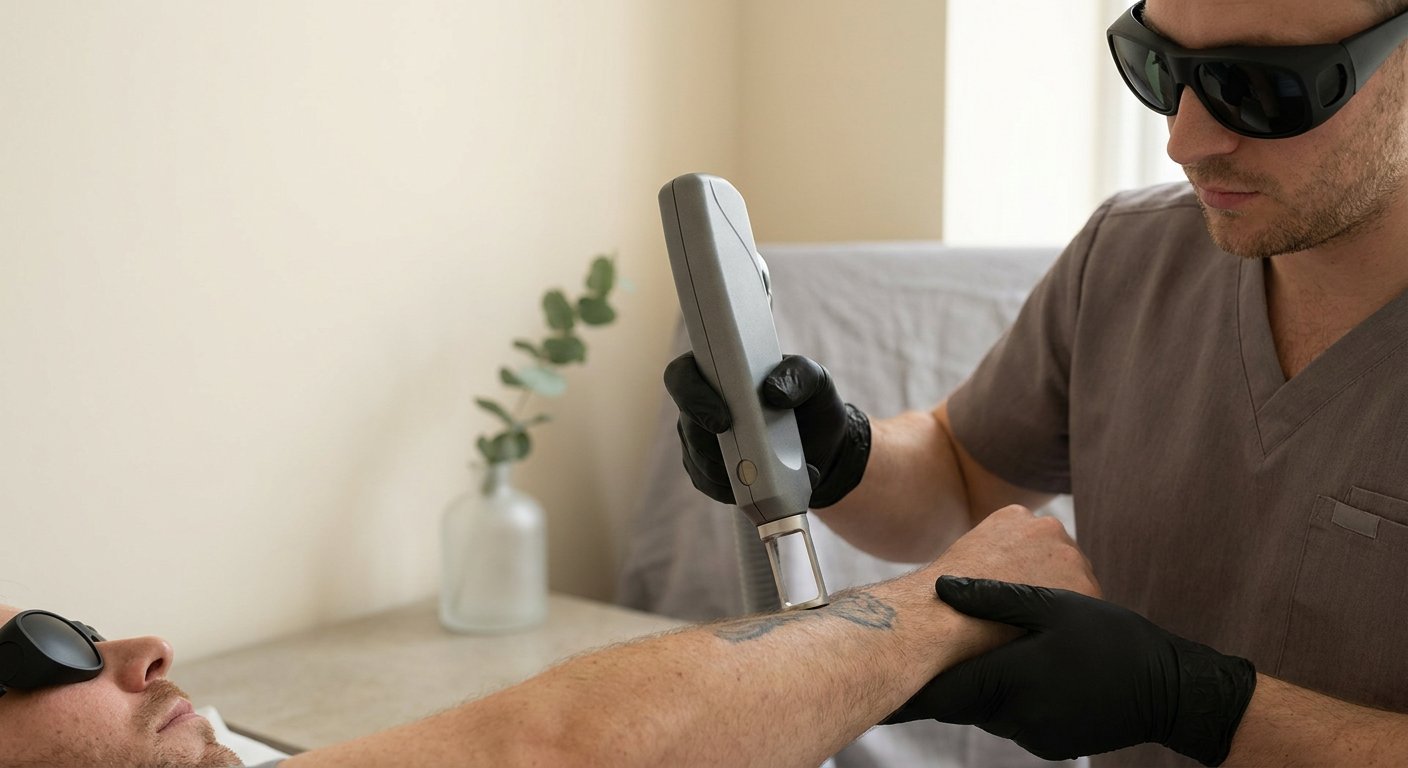
Table of Contents
- Understanding How Laser Tattoo Removal Works
- 5 Things to Know Before Laser Tattoo Removal Begins
- Laser Tattoo Removal Pain: What to Expect
- Side Effects, Risks and Scarring Concerns
- Tattoo Removal Aftercare: Your Healing Process
- Fading Your Tattoo for Cover-Up: Alternative Approach
- Why Choose Vale Laser Aesthetics in Talbot Green
- Conclusion: Making an Informed Decision About Laser Tattoo Removal
Last Updated: July 18, 2026
Understanding How Laser Tattoo Removal Works
Laser tattoo removal uses photothermolysis, light energy converted to heat, to break down ink particles. The laser emits concentrated pulses that penetrate skin without damaging surrounding tissue. Ink absorbs this energy and shatters into fragments small enough for the body's immune system to eliminate over weeks and months. The laser wavelength is chosen to match the ink colour being treated.
The science of ink oxidation and laser energy
Laser energy causes ink particles to expand rapidly and break apart. These fragments are small enough for your lymphatic system to process naturally. Energy is measured in joules per square centimetre; higher settings remove ink faster but increase side effect risk. We calibrate energy based on your skin tone, tattoo age, ink colour, and pigment depth.
Q-switched versus picosecond laser technology
Q-switched lasers deliver energy in nanosecond pulses and remain the proven industry standard. Picosecond lasers deliver energy in picosecond pulses, potentially requiring fewer sessions with less heat generation. Both work through the same mechanism: light energy breaks down ink. The choice depends on your specific tattoo, skin tone, and healing response.
5 Things to Know Before Laser Tattoo Removal Begins
Before committing to treatment, understand five critical factors that determine your results, timeline, comfort, and satisfaction.
Ink colour and removal difficulty
Black and dark blue inks respond most effectively because they absorb many light wavelengths. Red, orange, and yellow inks are progressively harder to remove. Green and purple present the greatest challenge and often require multiple sessions with different wavelengths. Professional-grade inks are more densely packed and chemically stable, making removal harder. Older tattoos fade naturally over time, making them easier to remove.
Skin tone considerations and the Fitzpatrick scale
Your skin tone fundamentally affects treatment safety and effectiveness. Darker skin contains more melanin, which can absorb laser energy intended for ink, risking insufficient removal and hyperpigmentation or hypopigmentation. Modern devices allow us to adjust wavelength, pulse duration, and energy for diverse skin tones. Effective removal is absolutely possible for darker skin with a practitioner who understands these technical adjustments.
Session frequency and realistic timelines
Most tattoos require 6 to 12 sessions spaced 6 to 8 weeks apart. This spacing allows your immune system to clear fragmented particles before the next treatment. Complete removal typically takes 12 to 24 months. Larger tattoos, multiple colours, or deeply placed ink take longer. Amateur tattoos sometimes fade faster because the ink is less stable.
| Factor | Impact on Timeline |
|---|---|
| Black ink only | 6-8 sessions, 12-16 months |
| Multiple colours | 8-12 sessions, 16-24 months |
| Professional-grade ink | 10-15 sessions, 20-30 months |
| Amateur ink | 4-6 sessions, 8-12 months |
| Tattoo age (10+ years) | Faster fading, fewer sessions needed |
Pre-treatment skin preparation requirements
Avoid sun exposure for at least 4 weeks before treatment; sunburned or tanned skin absorbs more laser energy and increases blister and scarring risk. Use SPF 30+ sunscreen daily during removal. Avoid other skin treatments like chemical peels or microdermabrasion, which compromise your skin barrier. Shave the treatment area the night before, but don't wax, pluck, or use depilatory creams.
Psychological preparation and expectations
Laser tattoo removal is a journey, not a quick fix. You'll see gradual fading over months, not dramatic disappearance after one session. After each session, your body spends weeks clearing ink fragments. By your fourth or fifth session, cumulative effects become obvious. Taking photos before treatment and every two months thereafter helps track progress.
Laser Tattoo Removal Pain: What to Expect
Pain perception varies dramatically between individuals but is typically described as uncomfortable rather than unbearable, like rubber bands snapping against skin. Your pain tolerance, tattoo location, and laser settings all influence your experience.

Pain management and numbing options
Topical anaesthetic creams containing lidocaine reduce surface sensation but don't eliminate deep pain. Ice applied before and after pulses reduces nerve sensitivity. For larger tattoos, local anaesthetic injections provide substantial relief. Most people manage with topical numbing and ice.
Comfort during treatment at our Pontyclun clinic
We prioritise your comfort with regular breaks during long sessions, allowing skin to cool and your nervous system to reset. We adjust laser settings based on your feedback. Lower energy settings cause less pain but may require additional sessions. Knowing what to expect reduces anxiety, which amplifies pain perception.
Side Effects, Risks and Scarring Concerns
Laser tattoo removal carries real risks. Most common side effects, blistering, redness, and swelling, are temporary. More serious complications like scarring or permanent pigmentation changes are rare but possible, especially with aggressive treatment or poor aftercare.
Hyperpigmentation, hypopigmentation and blistering
Hyperpigmentation (darkening) occurs when melanin production increases during healing, more common in darker skin tones, and usually resolves within 3 to 6 months. Hypopigmentation (lightening) is less common but more permanent. Blistering is normal and typically heals within a week; large or infected blisters increase scarring risk. Proper aftercare prevents most complications.
The risk of side effects increases dramatically with overly aggressive laser settings. We emphasise conservative settings and longer timelines because rushed treatment increases complications.
Allergic reactions and skin integrity protection
True allergic reactions to laser treatment are extremely rare. Some people react to fragmented ink particles as the immune system processes them, manifesting as itching, swelling, or rash that typically resolves within days to weeks. Protect your skin by avoiding sun exposure, not applying irritating products, and not scratching the treated area. If you have a history of keloid scarring, inform us before treatment.
Tattoo Removal Aftercare: Your Healing Process
Proper aftercare prevents complications, reduces pain, and optimises removal. Neglecting aftercare can result in infection, excessive scarring, or poor ink removal.
Sun exposure protection and wound care
Sun exposure is the greatest risk factor for complications after treatment. UV radiation increases inflammation and infection risk and can cause permanent hyperpigmentation. We recommend strict sun avoidance for at least 2 weeks after each session, with SPF 50+ sunscreen for at least 4 weeks. Keep the area clean and dry, wash gently with mild soap and cool water, and apply antibiotic ointment if blistering occurs. Avoid swimming, hot baths, and excessive sweating for the first week.
Timeline for visible results and ghosting
Visible fading typically appears within 2 to 4 weeks as your body clears fragmented ink. "Ghosting" refers to a stage where the tattoo becomes very faint but doesn't disappear completely. This can persist for months or become permanent if remaining ink is too deep or resistant. Not all tattoos can be completely removed; some reach a point where further treatment produces minimal fading.
Fading Your Tattoo for Cover-Up: Alternative Approach
Not everyone wants complete removal. Some clients prefer partial fading to make cover-up tattoos easier. Laser fading requires fewer sessions than complete removal, typically 3 to 5 instead of 10 to 15. Discuss your cover-up plans with your tattoo artist before beginning laser treatment so we can fade strategically.
Why Choose Vale Laser Aesthetics in Talbot Green
Vale Laser Aesthetics is HIW-approved and operates from our clinic on Talbot Road, Talbot Green, RCT CF72 8AE, serving Pontyclun and surrounding areas. Our practitioners are fully qualified with extensive training in laser safety and skin biology. We use medical-grade technology calibrated for diverse skin tones and tattoo types.
We've carried out over 20,000 treatments across South Wales with 230+ five-star reviews. We prioritise realistic expectations, conservative settings, and genuine results. We offer a free consultation to assess your tattoo, discuss your goals, and explain exactly what to expect, including honest timelines and limitations.
Laser tattoo removal requires patience, expertise, and realistic expectations. The five critical factors, ink colour difficulty, skin tone considerations, session frequency, pre-treatment preparation, and psychological readiness, form the foundation for successful outcomes. Choosing the right clinic matters enormously. At Vale Laser Aesthetics, we combine medical-grade technology with fully qualified practitioners and commitment to your safety. Contact us at 67 Talbot Road, Talbot Green, RCT CF72 8AE to begin your journey.
Frequently Asked Questions
How many sessions will laser tattoo removal take?
The number of sessions needed depends on tattoo age, ink colours, size, and skin tone. Most tattoos require between 6-12 sessions spaced 6-8 weeks apart to allow the dermis and epidermis to heal. Black ink typically fades faster than coloured ink. At our Talbot Green clinic, we assess your tattoo during a free consultation to provide a realistic treatment plan tailored to your needs.
Does laser tattoo removal hurt, and can you manage the pain?
Yes, laser tattoo removal causes discomfort, often described as similar to a rubber band snapping against skin. Pain varies depending on tattoo location and individual pain tolerance. We offer numbing cream and anesthetic options to minimise discomfort. Our HIW-approved practitioners at our Pontyclun clinic prioritise your comfort throughout each session, ensuring the experience is as pain-free as possible.
What is the risk of scarring or pigmentation changes after laser tattoo removal?
Scarring risk is low when proper aftercare is followed, though it depends on skin integrity and healing response. Hyperpigmentation (darkening) or hypopigmentation (lightening) can occur temporarily or permanently, particularly on darker skin tones. Following pre- and post-treatment instructions, protecting treated skin from sun exposure, and choosing a qualified practitioner significantly reduce these risks. Our team discusses all potential side effects during your consultation.
Can laser tattoo removal work on all ink colours and skin tones?
Black and dark blue ink respond best to laser treatment. Coloured inks like red, yellow, and green are more challenging. Skin tone matters significantly, the Fitzpatrick scale helps us determine suitability. Darker skin tones can be treated successfully, but require careful laser selection and settings. We assess your specific tattoo and skin during a free consultation at our clinic on Talbot Road, Talbot Green, to confirm the best approach for you.